


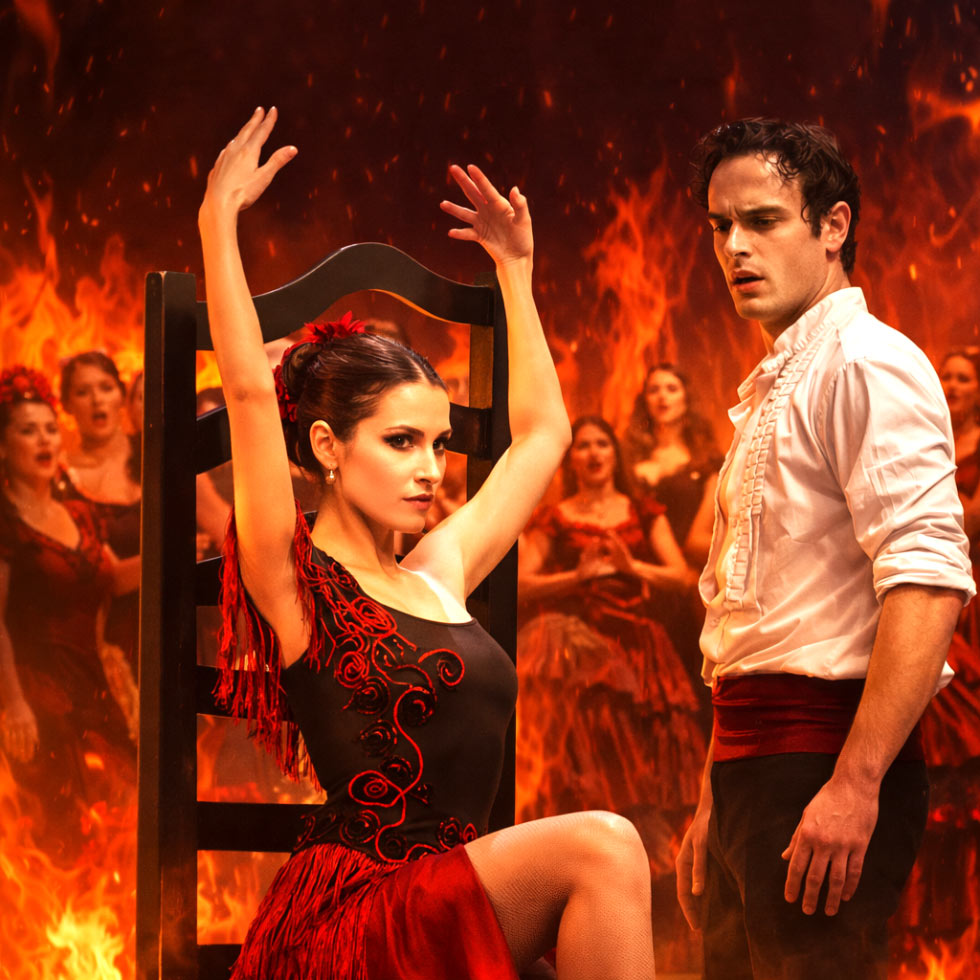
Opera is often called “one of the most powerful and enduring art forms”. At its heart, opera is a play in musical form: a theatrical drama in which characters speak their lines entirely through song. In fact, the European opera network Opera Europa defines it as a “total art form” that joins music, singing, drama, poetry, even visual spectacle and dance. In a live production, you’ll see lavish costumes, sets, and lighting while hearing the full orchestra and vocalists blend text and scorefriendsoftheopera.orgyusypovych.com. It’s this fusion of live music, voice, and staging that gives opera its unique emotional power.
Unlike a Broadway musical, traditional opera never (or seldom) uses spoken dialogue. As the Dallas Opera explains, in opera “the singing never stops” – even the simplest lines (“Open the door”) are sung, not spoken. The story unfolds through recitative (speech-like sung dialogue) and arias (solo songs). Recitative moves the plot forward in a conversational tone, while an aria expresses a character’s deepest feelings through soaring music. When two or more singers unite, they form duets, trios, or full ensemble finales. Onstage, chorus members and even dancers can join the drama. In each moment, the music—played by the orchestra under the conductor—propels the drama and conveys emotions that words alone often cannot.
A Brief History of Opera
Opera began in the late 16th century in Italy as an experimental fusion of Greek-style drama and music. Early composers such as Jacopo Peri and Claudio Monteverdi pioneered this art form at royal courts; Monteverdi’s Orfeo (1607) is often cited as the first grand opera. In the 1700s (Baroque/Classical era), composers such as Handel and Mozart expanded the form. Handel staged lavish operas for European palaces, while Mozart brought elegance and wit to works like The Marriage of Figaro and The Magic Flute.
The 19th century was opera’s golden age. Italian composer Giuseppe Verdi wrote passionately human dramas (La Traviata, Aida, Falstaff) filled with unforgettable melodies. In Germany, Richard Wagner revolutionized the genre with epic mythic cycles (like The Ring of the Nibelung) and the use of recurring musical themes called leitmotifs. By the turn of the 20th century, Puccini was adding verismo realism (e.g., La Bohème, Madama Butterfly), and later composers like Britten and Philip Glass showed that opera could adapt modern stories and styles. Opera’s history spans 400+ years, continually evolving while honoring its roots.
Many of opera’s classics remain staples on today’s stages. For example, the Sofia Opera and Ballet regularly stages works by these great masters. Recent and upcoming productions include Verdi’s Falstaff and La Traviata, Bizet’s Carmen, Puccini’s Madama Butterfly and Turandot, and even Wagner’s Das Rheingold and Die Walküre. These examples show how tradition is alive: Verdi’s dramas, Puccini’s Italian verismo, and Wagner’s German epics still captivate modern audiences in Sofia and worldwide.
Voice Types and Roles
Opera singers are usually grouped by vocal range (how high or low the voice naturally sits), plus weight and color (from light and agile to big and dramatic). Here’s the quick map, with Bulgarian star examples you can actually listen to.
- Soprano (highest female voice)
Often the heroine: young lovers, queens, tragic icons, the big emotional center of the night. Bulgarian sopranos span the full spectrum, from lyrical to powerhouse dramatic: Sonya Yoncheva (often described as a “dramatic lyric” soprano), Raina Kabaivanska (lirico-spinto), Ghena Dimitrova (famed dramatic soprano), Anna Tomowa-Sintow, and Alexandrina Pendatchanska. - Mezzo-soprano (middle female voice)
The scene-stealer range: Carmen-style charisma, witches and rivals, wise confidantes, heartbreak with velvet edges (and plenty of “pants roles,” too). Bulgaria has produced major mezzos such as Vesselina Kasarova and Alexandrina Miltcheva. - Contralto (lowest female voice, rare)
Contraltos are uncommon; when you hear one, it’s usually a deep, burnished sound that can feel almost otherworldly. Many contralto roles today are sung by lower mezzos, which is one reason the category feels “rare” on modern stages. (So if you love darker female timbres, explore mezzos too.) - Tenor (highest familiar male voice)
Typically, the romantic lead, the idealist, the reckless hero. Think urgent high notes and big “I would die for you” energy. A notable Bulgarian example is Kamen Tchanev, an internationally active operatic tenor. - Baritone (mid-range male voice)
Fathers, rivals, anti-heroes, tortured leaders,s and (in Verdi) some of the most dramatically rich parts in opera. A strong contemporary Bulgarian example is Kiril Manolov, widely associated with major Verdi baritone roles (including Falstaff). - Bass (lowest male voice)
Kings, priests, villains, philosophers, and comic “big presences.” Bulgaria is legendary here: Boris Christoff, Nicolai Ghiaurov, and Nicola Ghiuselev are among the most celebrated Bulgarian basses of the 20th century and beyond.
Each voice type brings its own color and dramatic possibilities. For example, in Sofia Opera’s Madama Butterfly (March 2025), Cio-Cio-San (Butterfly) is sung by a soprano while Lieutenant Pinkerton is a tenor. In Carmen (March 2025), the fiery title role is a mezzo-soprano part, with Escamillo (the toreador) a baritone and Don José a tenor. Verdi’s comic Falstaff (premiered in Sofia 2025) centers on the witty baritone lead, Sir John Falstaff. These casting traditions (heroic soprano, lyrical tenor, etc.) help listeners follow the drama: a soaring soprano line might signal the heroine’s passion, while a booming bass might underscore authority or humor.
Anatomy of an Opera Performance
An opera on stage is a whole sensory spectacle. It typically begins with an overture – an instrumental introduction by the orchestra. Then the story unfolds in two or three acts, each broken into scenes. Within scenes, the action alternates between recitatives (speech-like singing) and musical numbers. Recitatives mimic conversational speech and advance the plot, whereas arias or ensembles give characters a moment to express deep emotions through melody. For example, a grieving character might sing a tragic aria, while multiple characters might join in a dramatic quartet or chorus at a climax.
Behind the scenes, hundreds of people help bring the performance to life. The conductor leads the orchestra from a pit in front of the stage. A stage director cues the action, while lighting, costume, and set designers create the visual world. There are also choruses (singing crowds or groups of characters) and even ballet or movement sequences in some operas. Most opera houses now project surtitles (translations of the libretto) above the stage so that audiences can follow the words even in Italian, German, or another language. In Sofia’s National Opera Theatre, for instance, audiences enjoy how “live vocals, orchestral music, stunning costumes and sets create an unforgettable experience,” often with subtitles to ensure the story is clear. Each night’s performance is unique: lighting cues, singer nuances, and audience reactions mean no two shows are ever the same.
Opera Today: Relevance and Accessibility
Modern composers continue to write new operas, and inventive directors often stage classics with fresh perspectives. According to Friends of the Opera, opera’s combination of music, theater, and visual art makes it a “living, breathing art form” that explores universal human experiences. Love, jealousy, heroism, and humor in operas resonate just as strongly now as ever. Today’s opera uses technology to reach broader audiences: many productions are livestreamed or screened in cinemas (for example, The Met’s Live in HD series), so people across the country can experience top performances. Most houses also offer online archives or on-demand video libraries of past performances.
Crucially, the live experience of opera still packs an emotional punch. Hearing a powerful soprano soar over a full orchestra without amplification creates an intensity that recordings can’t match. As one guide notes, a live opera performance immerses you “in music, theater, and design all at once”, making each show a one-of-a-kind event. Even skeptics often leave the theater astonished by the raw human voice in full bloom.
In Sofia (as in other cities), opera houses work hard to keep the art form relevant. The Sofia Opera’s repertoire now ranges from grand classics to family-friendly events. For instance, they offer special programs like “Concert for Babies” and children’s performances, introducing the youngest audiences to music and stagecraft. The combination of historic masterpieces and innovative outreach ensures that Sofia audiences – and audiences everywhere – can discover why opera is still called the Queen of the Arts.
Further Reads
- Sofia Opera and Ballet – Official Repertoire page (local productions + titles)
Best primary source for what’s being staged in Sofia (applicable if you mention La Traviata, Carmen, Wagner, etc.). Opera Sofia - V&A (Victoria and Albert Museum) – “Opera: the total art form” (why opera is more than music)
Great for explaining opera as a collaborative, visual, musical, and theatrical art. Victoria and Albert Museum - San Francisco Opera – “A Short Guide to Opera Voices” (clear, audience-friendly voice guide)
Concise explanations + practical framing of voice categories and how they’re used on stage. San Francisco Opera - Sonya Yoncheva – Official biography (Bulgarian soprano example, primary source)
Useful as a reputable reference when citing examples of Bulgarian singers by voice type. sonyayoncheva.com