

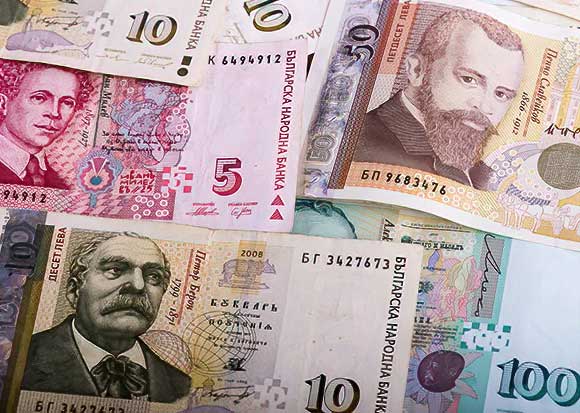
Bulgaria’s Currency: From the Lev to the Euro
For well over a century, the Bulgarian lev was more than a means of payment—it was a symbol of the modern Bulgarian state. That era has now closed: Bulgaria introduced the euro on 1 January 2026, and since 1 February 2026, the euro is the sole legal tender in the country.
Below is an updated, expanded version of the article, with extra historical context and practical, traveler-friendly guidance.
Quick facts for travelers
- Official currency now: Euro (€), ISO code: EUR (since 1 January 2026).
- Fixed conversion rate (former lev → euro): BGN 1.95583 = €1.
- If you still have Lev cash, you can exchange it free of charge at commercial banks and certain post offices until 30 June 2026, and indefinitely and free of charge at the Bulgarian National Bank.
Before the lev: money in the Bulgarian lands
Long before Bulgaria had its own national currency, the region used a mix of coinage circulating through the Ottoman Empire and European trade. At different times, people used Ottoman coins and foreign silver “thaler”-type coins, which were widely trusted in commerce. Historians even point to the Dutch “lion thalers” as a possible inspiration for the later name “lev” (“lion”).
The lev is born: statehood, sovereignty, and a “lion” currency
After Bulgaria re-emerged as a modern state (post‑1878), a crucial step of sovereignty was establishing a national monetary system.
- 1880: Bulgaria legislated its coinage system, establishing the lev as legal tender and setting it at par with the French franc—a deliberate move toward stability and European monetary standards.
- 1881: the first Bulgarian coins were minted (initially abroad), including small copper denominations for everyday use.
- The name “lev” is linked to an old Bulgarian word meaning “lion”, a powerful national symbol.
The Bulgarian National Bank (BNB), founded in 1879, became central to this new monetary system. In the decades that followed, Bulgaria’s early coinage and standards were strongly influenced by European monetary thinking of the time, including specifications aligned with the Latin Monetary Union.
A currency shaped by wars, reforms, and redenominations
Like many European currencies, the lev’s story mirrors Bulgaria’s political and economic turning points. Over time, Bulgaria carried out multiple reforms—some aimed at stabilization, others reflecting abrupt regime and policy shifts.
A few of the most important milestones:
- 1928 stabilization: an interwar reform sought to restore monetary stability after the shocks of the Balkan Wars and World War I, including a defined gold content of the lev.
- Post‑WWII reforms: Bulgaria restructured its currency and cash holdings rules amid shortages and rationing.
- 1952 and 1962 reforms: During the communist period, Bulgaria implemented compulsory exchange/redenomination measures—most notably a 10-to-1 reform in January 1962.
The turning point of the 1990s
The late 1990s were the decisive bridge from the Lev’s turbulent past to the euro era.
- After the severe financial turmoil of the mid‑1990s, Bulgaria introduced a currency board arrangement on 1 July 1997, pegging the lev to the Deutsche Mark (at 1,000 old leva per 1 DM).
- 1999 redenomination: Bulgaria removed three zeros from the currency. Parliament set 1,000 old leva = 1 new lev, effective 5 July 1999.
- When the euro replaced the Deutsche Mark as Europe’s reference currency, the lev’s anchor effectively shifted to the euro, leading to the long‑standing fixed rate of €1 = BGN 1.95583.
In other words, for years before the formal adoption of the euro, Bulgaria’s monetary policy was already tightly “euro-linked” through the currency board.
From “euro-linked” to “euro area”: Bulgaria adopts the euro
Bulgaria joined the Exchange Rate Mechanism (ERM II) in 2020—an important step toward adopting the euro.
On 8 July 2025, the EU Council formally approved Bulgaria’s accession and confirmed the conversion rate, and Bulgaria joined the euro area on 1 January 2026.
Key changeover points for visitors:
- 1 January 2026: the euro was introduced; euro cash began circulating (with a one‑month period during which both currencies could be used).
- 1 February 2026: The Euro became the sole legal tender in Bulgaria.
Euro cash in Bulgaria: what’s in your wallet now?
Euro banknotes
Bulgaria uses the standard euro banknotes: €5, €10, €20, €50, €100, and €200 (and €500 banknotes exist in the euro system, though they’re uncommon in circulation).
Euro coins with Bulgarian national designs
Bulgarian euro coins have the common European side, plus a Bulgarian national side:
- €2: Saint Paisius of Hilendar, a key figure in the Bulgarian National Revival
- €1: Ivan (John) of Rila, patron saint of Bulgaria and founder of the Rila Monastery
- Cent coins (1–50 cents): the Madara Horseman (a UNESCO World Heritage site rock relief)
- On cent coins, Bulgaria uses “стотинка/стотинки” (stotinka/stotinki) as the Cyrillic equivalent of “cent.”
This is a nice cultural continuity: even after the lev’s retirement, the familiar “stotinki” language remains visible on everyday small change.
Exchanging money in Bulgaria now
If you’re arriving with euros
No exchange is needed—the euro is the national currency.
If you’re arriving with another currency (USD, GBP, etc.)
You can exchange at banks and licensed exchange offices, as in any euro area country. Usual common-sense advice applies:
- compare rates (and watch for fees/commissions),
- avoid vague “0% commission” offers that hide the cost in the spread,
- keep receipts when exchanging.
If you still have Bulgarian lev (coins or banknotes)
You can still convert it officially:
- Free exchange until 30 June 2026 at commercial banks and certain post offices (after that, they may charge a fee and are only obliged to exchange until the end of 2026).
- Indefinite, free exchange at the Bulgarian National Bank.
A simple conversion tip
Because the rate is fixed, converting old lev prices is straightforward:
- Euro = Lev ÷ 1.95583
- Lev = Euro × 1.95583
Example:
BGN 19.56 ≈ €10.00 (because 19.56 ÷ 1.95583 ≈ 10)

, divided into 100 stotinki. The lev has been the official currency of Bulgaria since 1881)