


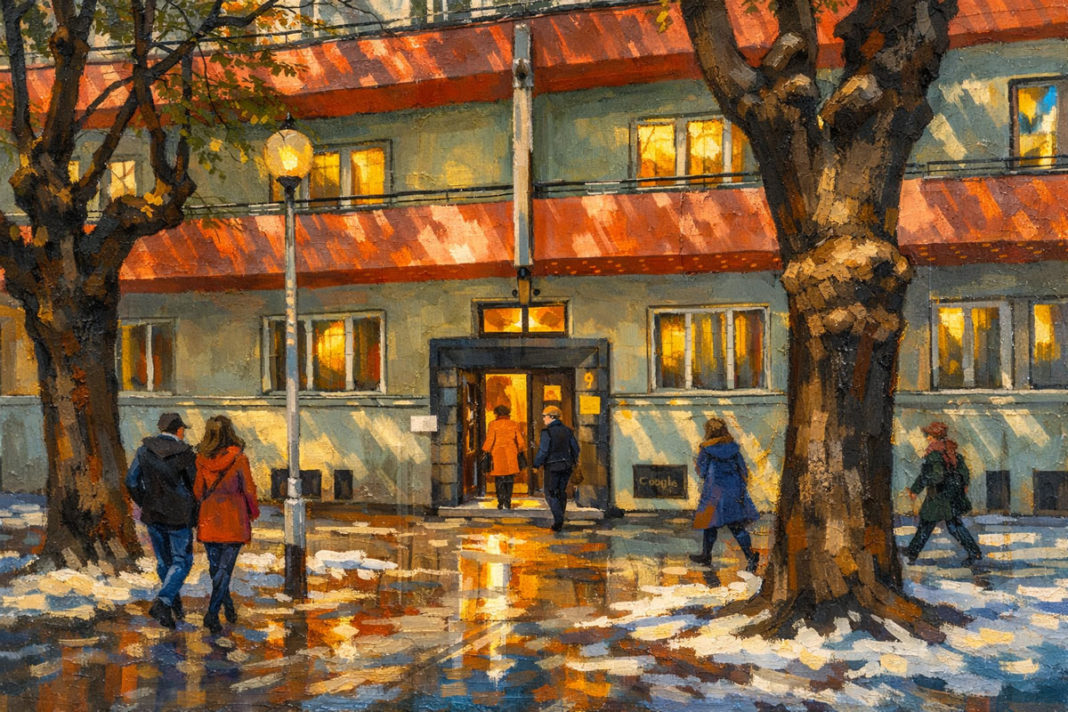
Nestled in the heart of Sofia, the Doktorski Pametnik neighborhood (around the intersecting Shipka and Oborishte Streets) is widely regarded as one of the capital’s most prestigious residential areas. Also known as the Doctor’s Garden quarter for its Central Park, this enclave blends rich history, cultural heritage, and high-end property appeal. Stately 19th-century architecture and leafy green spaces give the district an atmosphere of old-world aristocratic charm, even as it buzzes with modern cafés and galleries. It’s little wonder that Doktorski Pametnik is both highly prized and highly priced – a place where real estate, culture, and society fuse into a unique urban tapestry.
Steeped in History and Culture
This quarter draws its name from the Doctor’s Monument (Doktorski Pametnik) – a stone obelisk at the center of Doctor’s Garden park, erected in 1883–1884 to honor the medics who perished in the Russo-Turkish Liberation War. The surrounding Doktorska Gradina (Doctor’s Garden) is a lovingly maintained park, lined with hedges, benches, and even fragments of ancient ruins. It serves as a green oasis in the city center, featuring rare trees such as century-old ginkgo and cypress, a lapidarium with a fountain, and playgrounds that draw families by day. On summer evenings, locals relax here with a drink in hand – the park effortlessly doubles as both a tranquil retreat and a trendy social spot, true to predictions that it would become a cool spot for a beer or two at night.
The cultural richness of the area extends well beyond the park’s borders. Just steps away rise some of Sofia’s grandest landmarks: the gold-domed Alexander Nevsky Cathedral, the National Library, Sofia University, and the National Gallery for Foreign Art are all within walking distance. The neighborhood itself is dotted with authentic historic buildings designed by famous architects of the late 19th and early 20th centuries. Many of these elegant edifices are listed cultural monuments, displaying architectural styles from Neo-Baroque facades to Secession (Art Nouveau) details. A prime example is the legendary House with the Strawberries, a 1920s mansion whose Secessionist beauty – from its ornamented columns to its towered balcony – made it an icon of Sofia’s architectural heritage. After decades of decay during and after the communist era, this house was finally purchased in 2024 by new owners committed to a full restoration, pledging to preserve its authentic appearance and historic value. Such efforts highlight the neighborhood’s reverence for its past: here, history isn’t just a backdrop but a living asset that residents and investors are keen to protect.
An Aristocratic Allure and Exclusive Social Fabric
Walking through Doktorski Pametnik, one immediately senses its aristocratic aura – a tone set by grand old residences, polite, quiet streets, and well-tended gardens. Indeed, ever since the early 1900s, this quarter has been synonymous with Sofia’s elite. Many opulent townhouses were originally built in the 1920s–1930s by wealthy Bulgarian families during the post-independence boom. Even during the communist period, the area’s exclusivity was preserved: while some magnificent homes were nationalized to host foreign legations or senior officials, a few discreet mid-century apartment blocks were erected specifically to house the Communist Party nomenklatura and prominent figures in the arts. The result is that today’s residents are a mix of old aristocratic lineages, heirs of the socialist-era elite, and a newer generation of affluent professionals who have made it in post-1990s Bulgaria. In effect, Doktorski Pametnik is known as the “neighborhood of the rich” – owning a home here is considered an absolute status symbol.
It comes as no surprise, then, that the area boasts an impressive roster of high-profile inhabitants. From Bulgaria’s prima chanteuse Lili Ivanova to football legend Dimitar Berbatov, many celebrities call (or have called) this district home. The former mayor of Sofia, ministers, renowned actors, and business magnates have all settled in these few cherished blocks. There is a palpable sense that no random people live here, nor random neighbors – it is a community of the influential and well-to-do. This rarefied social fabric is reinforced by the strong presence of foreign embassies and diplomatic residences. Stroll down Oborishte, Shipka, or San Stefano Street, and you will pass a succession of ambassadorial plaques: Italy’s embassy sits on Shipka, the Swiss embassy on another corner, the Georgian embassy next door, among many others. Housed in splendid Secession- and Baroque-style mansions (originally built for bankers and politicians a century ago), these diplomatic missions lend the quarter an international, dignified air. They also contribute to the neighborhood’s security and serenity – the streets are under constant surveillance and patrolled by police and private guards, keeping petty crime virtually nonexistent. Unlike other parts of Sofia, here you won’t find graffiti, overflowing bins, or stray dogs; instead, you’ll see diplomatic limousines, discreet security cameras, and gardeners pruning roses around the Doctor’s Garden. The whole ambience bespeaks order, safety, and privilege.
Despite (or because of) its exclusivity, Doktorski Pametnik has become a beloved destination for Sofianites seeking civilized leisure. The quarter is sprinkled with upmarket cafés, artisanal bakeries, and gourmet eateries, which add vibrancy to the refined calm. It’s telling that Sofia’s most expensive loaf of hand-crafted bread – priced at 50 leva – is sold here, at a chic bakery on San Stefano Street. At Easter, the city’s priciest gourmet kozunak (brioche) can be found at a boutique deli on Oborishte Street, catering to residents who don’t mind paying top dollar for quality. Trendy bistros and coffee shops abound, many offering weekend brunches (eggs Benedict and even vegan banitsa are local favourites) to well-heeled patrons. Yet these establishments remain tastefully low-key – much like the neighborhood itself, they exude understated luxury rather than garish flash. In Doktorski Pametnik, wealth and culture go hand in hand. Residents not only enjoy fine dining and high-end boutiques, but also frequent the area’s theaters, galleries, and museums; the National Opera is a short stroll away, as is the Ivan Vazov National Theatre across the adjacent parkland. In every sense, this quarter provides a cultivated lifestyle that sets it apart from anywhere else in Sofia.

Gentrification and Preservation in Balance
Over the past few decades, Doktorski Pametnik has experienced a gentle wave of gentrification – or perhaps more accurately, a re-gentrification that returned the area to its former glory. Many of the grand old houses, once dilapidated or subdivided into offices, have been painstakingly restored as single-family residences, boutique hotels, or ambassadorial mansions. Several pre-war apartment buildings have been renovated and luxuriously refitted, combining beautiful historic architecture with contemporary amenities. Even the relatively modest 1950s–60s buildings (built for communist apparatchiks) have not escaped upgrade: their flats, once assigned to party journalists and actors, are today gutted, redesigned, and sold as high-end apartments to new elites. The limited new construction that occurs is invariably upscale and sensitive to the neighborhood’s character (local regulations ensure building heights and facades remain in harmony with the historic surroundings). The overall result is a housing stock dominated by premium properties – whether it’s a century-old townhouse with a private garden, or a top-floor penthouse in a 1960s block that’s been retrofitted with Italian marble and smart home technology.
A standout example of recent gentrification is the story of the aforementioned House with the Strawberries on San Stefano Street. After decades of neglect (it was nationalized in the 1940s and later nearly left to ruin), this iconic mansion became a cause célèbre for preservationists. In late 2024, it was purchased by SiteGround’s founder, Tenko Nikolov, who has announced plans to fully restore the mansion’s Secession-style splendour and reopen it as a showcase home. The sale was hailed as one of the most significant real estate deals of 2024, not for its price, but for its symbolic value in saving a cultural monument. It exemplifies how deep-pocketed buyers in this area often see themselves as custodians of Sofia’s heritage, investing not only in bricks and mortar but also in preserving architectural history for future generations. Indeed, the ethos at Doktorski Pametnik is that old is gold: restoring a century-old façade or preserving an original wrought-iron balcony is a matter of pride. The neighborhood’s gentrification, therefore, has a decidedly positive connotation, balancing modernization with respect for tradition.
This careful balance extends to the social and commercial realms as well. The influx of a few new boutique businesses – an art gallery here, an organic cosmetics shop or a delicatessen there – has brought fresh life to the quiet streets, but always in keeping with the area’s refined tone. In recent years, a community initiative brought together local residents, businesses, and the city to maintain green spaces and cobbled lanes. In short, Doktorski Pametnik has polished its patina without losing its soul. It remains a quintessential old Sofia quarter, but one that has gracefully adapted to the demands of 21st-century luxury living.
Sky-High Property Prices and Future Outlook
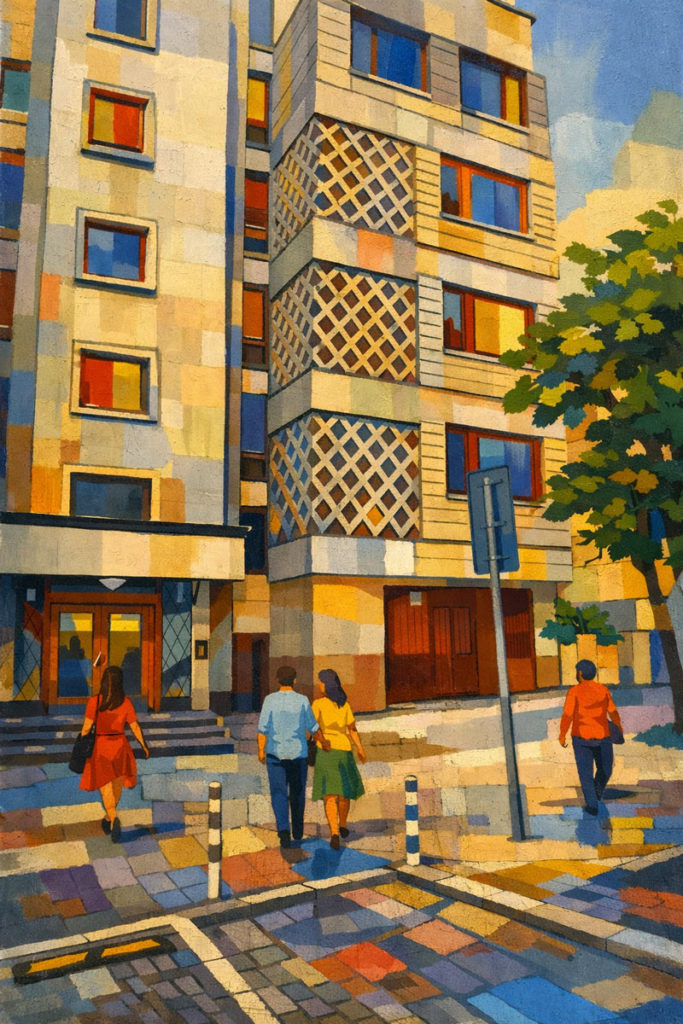
All these advantages come at a price – literally. Residential property in the Doktorski Pametnik (Doctor’s Garden) area is the most expensive in Sofia, by a considerable margin. For years, it has topped the city’s price rankings, and recent figures confirm its elite status. As of late 2024, homes in this quarter were selling for an average of around €3,691 per square meter, the highest in the capitalfakti.bg. This was several times the price in Sofia’s peripheral districts and well above other upscale areas such as Ivan Vazov and Lozenets, which hovered around €3,000/m². Yet even that record was soon surpassed. By the end of 2025, amid surging demand for central Sofia properties, the average listing price around Doktorski Pametnik soared to about €5,228 per sq.m – the only neighborhood in Sofia to break the €5,000 barrier, putting it on par with prime locations in many Western European capitals. The next most expensive area, the leafy Izgrev quarter, trailed slightly at €4,923/m². To put these numbers in perspective, a comfortable two-bedroom flat of 120 m² in Doctor’s Garden can easily fetch well above half a million euros. In fact, multi-million euro sales are no longer unheard of – for instance, a penthouse near the Doctor’s Monument was recently offered at €2 million. There are anecdotes of particularly exceptional properties (say, a historic mansion facing the park) quietly commanding astronomical prices per square meter – figures that were once whispered as legend but are now very much a reality in this exclusive market.
What drives these sky-high prices? Fundamentally, it is a classic case of demand outstripping supply in a location that cannot be replicated. The Doctor’s Garden quarter is small and mostly fully built-up; properties seldom come onto the market, and when they do, competition is fierce among affluent local buyers and international investors alike. There is a severe shortage of high-quality properties in central Sofia, most acutely in prized areas such as Doktorski pametnik. Buyers are drawn not just by the bricks and mortar, but by the prestige of the address and the incomparable living environment – the park view, the proximity to power (Parliament and ministries are nearby), the cachet of having an Alexander Nevsky Cathedral as your neighborhood church. In addition, Bulgaria’s robust economic growth and rising incomes in recent years have given more buyers the means to pay a premium for such locations. Even the country’s expected entry into the Eurozone has played a role, fueling investment as people anticipate a further uplift in property values. Thus, prices have climbed to new heights, as one news outlet put it, and the Doktorski pametnik area now approaches prices in big European capitals.
Looking ahead, the consensus is that this district’s property values will remain resilient. Future prospects appear strongly positive, though perhaps not as meteoric as the recent past. Market experts suggest that Sofia’s housing market has begun to cool and is approaching equilibrium at a high plateau after several years of double-digit growth. Higher interest rates and a surge in new construction elsewhere in the city may temper the pace of price increases. However, all indicators point to stability and confidence in the prime segment, according to Bulgarian Properties’ analysts. In other words, while there may be a slight breather from rapid growth, no one expects prices in Doktorski Pametnik to fall significantly – the area is simply too unique and too coveted. Its value is underpinned not just by economics but by intangible qualities: historical character, central location, diplomatic and institutional presence (which tends to buffer against downturns), and a community that fiercely maintains its environs. Unless there is a major global downturn or a drastic shift in local conditions, the forecast for this neighborhood is for sustained high demand and incremental appreciation. Buying a property in Doctor’s Garden is as close as it gets to a ‘sure bet’ in Bulgarian real estate. The combination of limited supply and enduring prestige suggests that owning a home here will remain not only a status symbol but also a solid store of value in the years to come.
A Fusion of Property, Heritage, and Lifestyle
In the final analysis, Doktorski Pametnik (the Shipka-Oborishte Doctor’s Garden area) stands out as far more than just an expensive address – it is an embodiment of Sofia’s identity. Few places in the city (or indeed in Bulgaria) concentrate so much of the nation’s heritage, creativity, and prosperity into one quarter. Its cobblestone streets and ornate facades tell stories of Bulgaria’s late-19th-century renaissance, while its contemporary cafés and art spaces speak to a vibrant modern urban culture. It’s a quarter where you can live amidst museums and monuments, yet also be steps from trendy eateries and top-notch schools. It’s at once lively and peaceful, elitist and inviting. For residents, it offers the rare luxury of central city living with a garden-town feel – a place where you can sip coffee under an old chestnut tree, hear children laughing in the playground, and later stroll to the opera in formal attire. For investors and homebuyers, it represents the pinnacle of Sofia’s property market, a blue-chip investment underpinned by historical scarcity and social cachet.
Sources and further reading: The information and data in this article were drawn from credible sources, including real estate market reports and local publications. Key references include Unique Estates’ area description of Doctor’s Garden – ues.bg and ues.bg; news analysis of Sofia’s most expensive districts – fakti.bg and expert.bg; Bulgarian-language features on the Doktorski Pametnik neighborhood and its history – galardo.bg and galardo.bg. Notably, Galardo’s “Kvartalăt na bogatite” offers insight into the area’s social makeup and ambience – galardo.bg. These sources collectively paint a comprehensive picture of why this district is esteemed both culturally and in real estate terms. All sources have been carefully vetted to ensure accuracy and credibility in portraying the past, present, and future of Doktorski Pametnik’s property landscape.
Interesting Reads
- Bulgaria Property Market Forecast 2026: Euro Adoption, Supply Frictions and Where Prices Go Next
- Bulgarian Real Estate Market 2025: Outlook for Investors and Expats
- Forgotten by Time – Homes, Community Hubs, and Abandoned Properties