

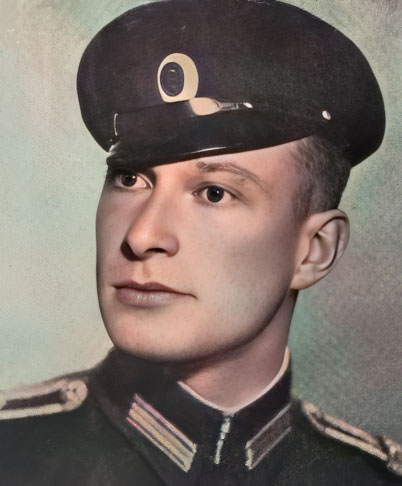
Bulgaria’s World War II air defense has a face and a call sign. Friends called him Spaich. On 20 December 1943, Flying Officer Dimitar Spisarevski climbed into a reserve Messerschmitt because his own machine would not start, caught up with an oncoming stream of B-24 Liberators over the Sofia basin, and chose a tactic as old as combat itself. He rammed the lead bomber near the village of Dolni Pasarel. Both aircraft fell. The city below lived through another day. In one violent instant, the young pilot wrote himself into Bulgaria’s book of duty, skill, and sacrifice.
“Courage is a decision made in seconds that people remember for decades.”
Dimitar Spisarevski
Fast facts
- Name variants: Dimitar Spisarevski, Димитър Списаревски, Spaich
- Born: 19 July 1916, Dobrich, Bulgaria
- Died: 20 December 1943, near Dolni Pasarel, Sofia region
- Service: His Majesty’s Air Troops, 3/6 Fighter Wing
- Aircraft flown: Messerschmitt Bf 109
- Known for: Ramming a B-24 Liberator during an Allied raid on Sofia on 20 December 1943
- Honors: Cross of Bravery; posthumous promotion to Captain in 1944 and to Air Force Colonel in 2009
Why he matters
He became the most widely remembered Bulgarian fighter pilot of the war because his last decision fused skill with self-sacrifice. His action did not end the bombing campaign. Still, it disrupted a formation at a critical moment and turned one of the war’s most destructive technologies into shattered aluminum in a snowy ravine. For many Bulgarians, he embodies a specific ideal of service, the willingness to be the last wall between civilians and violence from the sky.
From borderlands childhood to fighter school
Spisarevski was born in Dobrich, a city whose control swung with the treaties that followed World War I. His family moved through Lom, Belogradchik, and Sofia in the 1920s. He entered His Majesty’s Military School, briefly left after disciplinary trouble, then returned on merit. When a pilot contest opened, he put his name forward, precisely the sort of candidate who learns fast and fights hard. In 1938, he completed advanced training at the Luftwaffe fighter school at Werneuchen near Berlin, part of a Bulgarian cohort sent to master the new tactics and machines of modern air war.
A winter raid and a split-second choice
The Allied strategic air offensive reached the Balkans from bases in Southern Italy during 1943. On 20 December a force of B-24 bombers with fighter cover headed for Sofia. Thirty-six Bulgarian fighters launched from Bozhurishte to meet them. Spisarevski’s first Bf 109 would not start; he scrambled in a reserve aircraft and arrived over the mountains as the formations converged. He evaded two intercepting P-38s, drove toward a 16-ship group of Liberators, and kept firing until the last second. Then he turned his light fighter into a kinetic weapon. Witnesses saw the lead bomber split in mid-air. Only the tail gunner survived. Spisarevski’s machine came down near Dolni Pasarel. He was 27.
Aftermath, honors, and memory
For bringing down a four-engine bomber, Spisarevski was credited posthumously with multiple aerial victories and promoted to Captain. He was buried in the Central Sofia Cemetery in the Pilots’ Alley, and decades later, the Bulgarian Air Force recognized his standing with a ceremonial posthumous promotion to Colonel in 2009. Memorials and annual remembrances keep his name in public life because his story reads like a compressed epic of duty, talent, and fatal choice.
Style of flying, style of character
Accounts by peers describe a pilot who pushed hard in training, fought for standards in his unit, and never separated skill from responsibility. The Werneuchen period matters here. He returned not only with aerobatic polish but also with formation discipline, gunnery timing, and a view of air combat as a team sport. That mindset helps explain what happened over Pasarel. He did not ram out of the spectacle. He rammed because he had run out of ammunition at the decisive second and because the geometry of the formation offered one last way to break it. Scribd
In recent years, his legend has retaken physical form. Through an initiative by the Association of Independent Builders of Bulgarian Aviation (AIBBA), a newly constructed replica of Spisarevski’s Messerschmitt Bf 109 has been completed and unveiled in Bulgaria. The project restores not only the aircraft’s silhouette but also the sense of national pride linked to its story, bringing back to life the machine that once defended Sofia’s skies.
Timeline
- 1916: Born in Dobrich
- 1930s: Studies in Sofia, enters His Majesty’s Military School, selected as a pilot trainee
- 1938: Completes fighter training at Werneuchen, Germany
- 1943, summer to autumn: Flies with 3/6 Fighter Wing as Allied raids intensify over Bulgaria
- 20 December 1943: Ramming attack on B-24 near Dolni Pasarel during raid on Sofia, killed in action
- 1944: Posthumous promotion to Captain and award of the Cross of Bravery
- 2009: Ceremonial posthumous promotion to Colonel by the Bulgarian Air Force
- 2025: Construction of a replica Bf 109 fighter dedicated to Spisarevski by the AIBBA
Frequently asked questions
Did Spisarevski end the raid?
No. The bombing of Sofia continued into 1944. His action broke a formation and became a national symbol, but it did not end the Allied air offensive.
Was ramming a recognized tactic?
It was uncommon and hazardous. Pilots sometimes used it as a last resort when out of ammunition or when a decisive shot could not be set up in time. Spisarevski’s case is one of the most cited examples in the Balkans context.
Where is he buried?
Central Sofia Cemetery, in the Pilots’ Alley.
Why is he still discussed?
His story sits at the intersection of national defense, the ethics of sacrifice, and Sofia’s lived experience during the air raids. Each anniversary invites the city to remember both the losses and the people who tried to limit them. BNR
Legacy and how to read him now
Read Spisarevski as a pilot whose brief career concentrated the contradictions of the time. He trained with Germany, defended Bulgarian skies, and died trying to break a formation aimed at his own capital. The episode will always carry political and moral debate. That debate is part of why his name still resonates in public memory. For a Notable Bulgarians series, he represents the extreme edge of service. This young officer made a split-second decision that civilians on the ground would remember long after the smoke cleared.