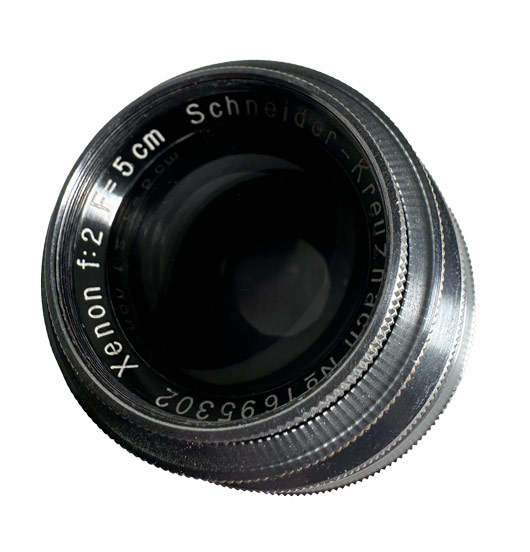

Lens overview
The Schneider-Kreuznach Xenon 50mm f/2 for the Kine Exakta is one of those lenses that feels like a time capsule from the moment “35mm” stopped being a miniature format and became a serious photography format. In the late 1930s, a fast f/2 standard lens was not a casual kit option. It was instead a statement: brighter viewing, more reliable focusing, and the promise of shallow depth of field at a time when emulsions were slow and low light was a fundamental constraint.
This Xenon is rare today, partly because it sits at the intersection of early SLR history and pre-war production realities. Many copies are uncoated (or very lightly coated, depending on the exact year and intended use), and condition is everything: haze, cleaning marks, and internal dust are common and matter more here than on later, better-coated optics.
Where it was used (and why that matters): Xenon f/2 optics (in various mounts and shutters) also appeared on premium compact cameras of the era and later post-war German production, including Kodak Retina models with the fixed “Retina-Xenon” 5cm f/2. In other words, this “Xenon look” is not only an Exakta story but also part of a wider Schneider push into fast, high-end normal lenses for the mass market.
Pricing then and now (practical collector view): Pricing is hard to pin down cleanly for the lens alone (it was often bundled with camera bodies or offered through regional dealer lists), but f/2 normals in the late 1930s were positioned as premium upgrades, not budget glass. Today, market value swings wildly with mounting originality, optics condition, and whether the listing is aimed at shooters or collectors. Expect roughly €200–700+ for a clean, usable Exakta-mount example in exceptional condition (clean glass, smooth mechanics, intact engravings, caps), with prices climbing beyond that.
Build and ergonomics
This is “mechanical photography” in the purest sense. Metal-on-metal precision, a deliberate focus throw, and a physical relationship with aperture that modern lenses have mostly abstracted away.
What you typically notice immediately:
- All-metal construction with a compact, dense feel
- Manual focus only, and usually a longer throw than modern 50s, encouraging careful placement
- Aperture design varies by version (many pre-war lenses use a preset-style or early stop system rather than modern click stops)
- Engraving and finish often signal era: pre-war cosmetics and machining cues are part of the charm
Ergonomically, it rewards slower shooting. It is not built for rapid focus changes or one-handed operation. It is built for intention.
Optical performance
Think of this Xenon as a lens that carries two personalities: one technical, one atmospheric. Wide open, it can be surprisingly competent for its age, but it is rarely “clinical.” Stopped down, it becomes more controlled and historically “correct” in the best way: crisp enough to describe reality, but never so harsh that it stops feeling like film-era glass.
Sharpness and contrast
- Wide open (f/2): center detail can be good, but contrast depends heavily on coating (or lack of it), internal haze, and element cleanliness. Edges are softer, with a gentle falloff that often looks flattering rather than flawed.
- f/2.8–f/4: a notable jump in clarity and contrast on a good copy.
- f/5.6–f/8: the lens tends to look “settled” and balanced, with much more even performance across the frame. Flare persists.
Rendering and bokeh
This is where the Xenon earns its place. Out-of-focus areas often have a classic, slightly textured transition. It can look romantic without becoming mushy, especially for portraits or detail studies at medium distances. Highlights can show older-era signature behavior (shape depends on blade design and version), which is why many people buy the lens in the first place.
Flare resistance
Pre-war optics and flare are inseparable companions. If your copy is uncoated, expect:
- lowered contrast when shooting into light
- veiling flare that can “wash” blacks
- occasional dramatic ghosts that look cinematic in the right frame
A deep hood (or even careful hand shading) makes a bigger difference here than on most later lenses.
Chromatic aberration and how to handle it
Longitudinal and lateral CA do appear, especially wide open and on high-contrast edges. With vintage lenses, correction is usually a workflow decision:
- In Lightroom / Adobe Camera Raw: there is no dedicated profile for this specific pre-war Exakta Xenon, so you rely on Remove Chromatic Aberration plus manual purple/green defringe as needed.
- The good news: CA is rarely the “main problem” with this lens. Flare and low contrast from haze or coatings are usually the bigger variables.
Digital adaptation (only when adaptation is needed)
If you shoot mirrorless, this lens provides a straightforward adaptation.
- To mirrorless (Sony E, Canon RF, Nikon Z, Micro Four Thirds): straightforward with a simple Exakta-to-your-mount adapter.
- To Canon EF DSLR: Exakta can be awkward on EF bodies. Because EF’s flange distance is shorter than Exakta’s, a simple “ring” adapter often won’t place the lens at the correct register for infinity focus. Many Exakta→EF adapters therefore add an optical correction element (essentially a weak teleconverter), which can reduce sharpness, increase flare, and change the rendering. The alternative is to use a non-optical adapter and accept close-focus only.
- To Canon RF (mirrorless): RF is the clean solution. The RF mount has a much shorter flange distance, so an Exakta→RF adapter is purely mechanical—no glass, complete infinity focus, and you keep the lens’s original character. On IBIS-equipped bodies, set the focal length to 50 mm for steadier handheld shooting, and use magnification/focus peaking for precise focus.
Practical tip: if you want this lens for real shooting, mirrorless is the natural home.
Historical and collector context
“Xenon” is not just a product name. It signals Schneider’s deep entry into fast, Double-Gauss-derived normals at the moment the 35mm system camera world was being invented in real time.
A few key historical notes that shape why this lens matters:
- The Xenon lineage is tied to the broader rise of fast Gauss designs that made focusing and low-light shooting viable on early SLRs.
- Xenon f/2 lenses were available in multiple focal lengths across photographic and cine applications (including wider and longer variants), reflecting Schneider’s intent to make speed a system feature, not a one-off trick.
- Schneider also produced Xenon variants for other platforms, including Kodak Retina cameras in the post-war period, which helped spread the “Xenon look” beyond interchangeable-lens users.
Collector value tends to be driven by:
- true pre-war precision production
- original mount integrity and engraving
- optical condition (no haze, no separation, minimal cleaning marks)
- mechanical health (smooth focus, workable aperture mechanism)
Impressions (personal experience with the lens)
This is the kind of lens that changes how you shoot, because it changes how you think. You do not machine-gun frames with it. You place the camera, you watch the light, you accept that flare is not a defect but a design reality, and you start composing around glow and contrast instead of fighting them.
When it clicks, the results feel less like “a file” and more like an image from a period.
It is at its best when you lean into:
- portraits with gentle transitions
- street scenes with natural light and soft highlights
- detail photography where the center sharpness and vintage falloff feel intentional
Sample photos
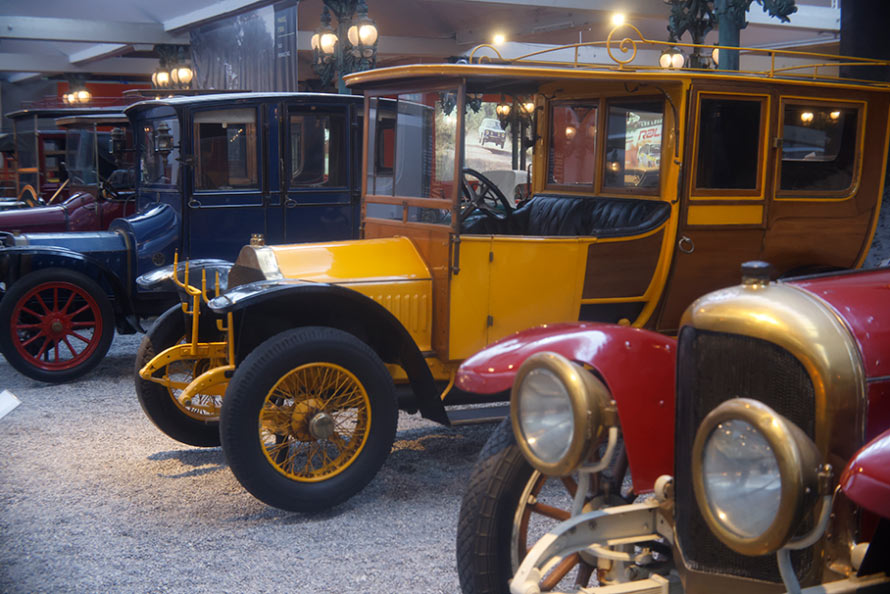
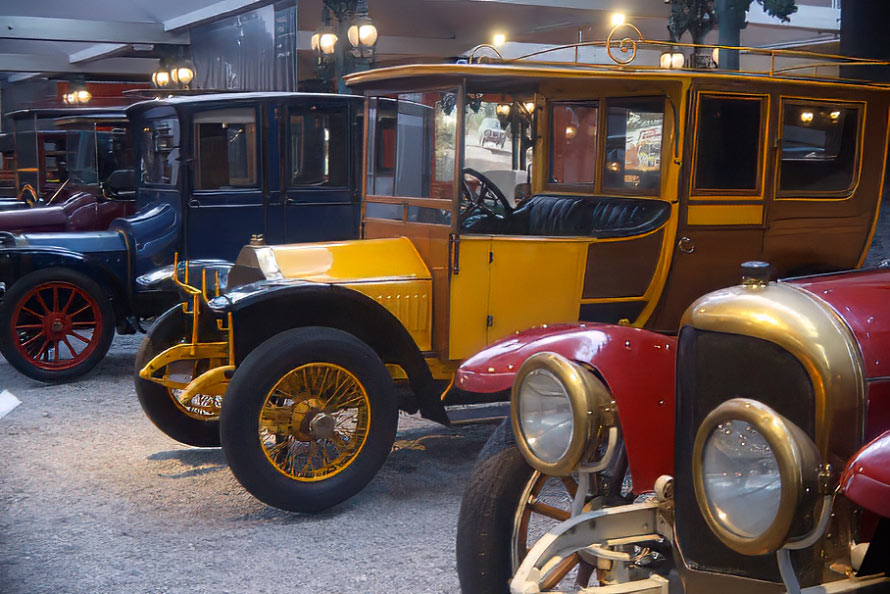
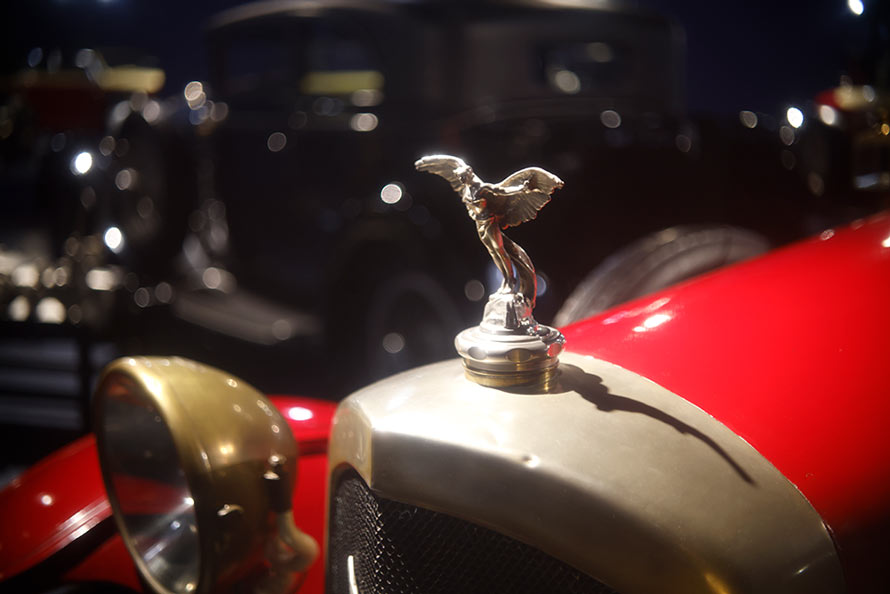

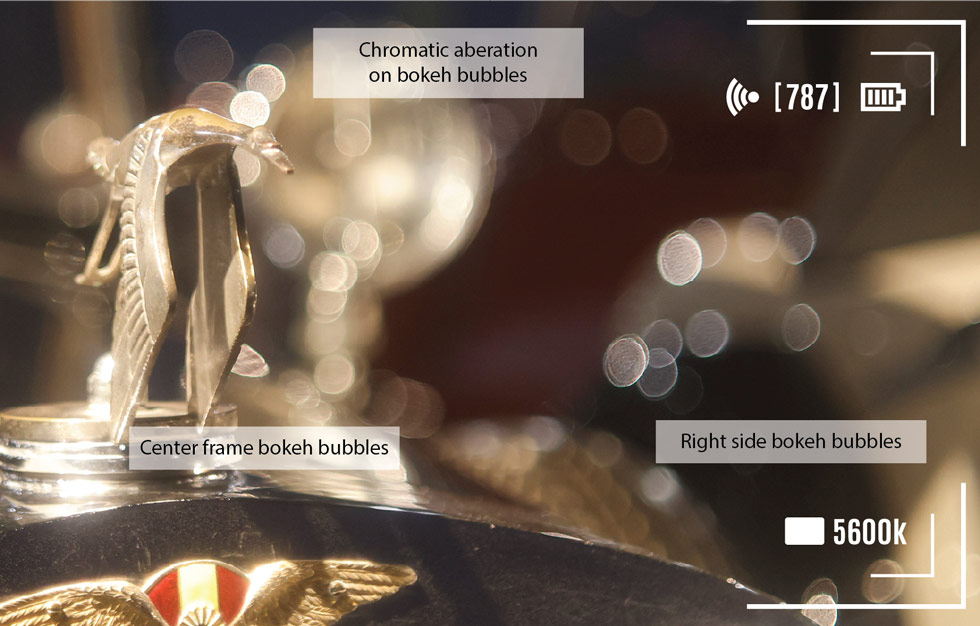

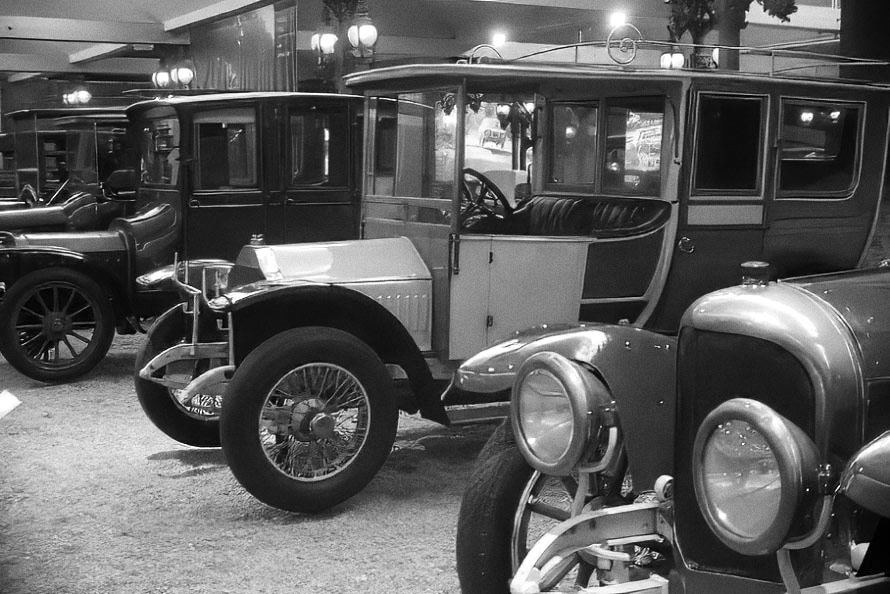
Most of the sample photos here were shot in challenging lighting to demonstrate how the lens performs under stress, for instance, handling direct light, flare, out-of-focus rendering, and low-quality illumination.
Verdict (with Pros and Cons)
The Xenon 50mm f/2 for Kine Exakta is not a “best-value 50mm.” It is not a modern performer. It is a historically significant, beautifully mechanical, and genuinely expressive lens that can still make images with personality and presence.
If you want a clean, modern 50mm experience, you buy a contemporary 50mm. If you’re going to shoot something that feels like early SLR history in your hands, this is one of the real ones. If you are into vintage experience, but prefer newly manufactured lenses – check out the Modern Vintage-Style Lens Makers.
Pros
- Profound historical importance in early 35mm SLR culture
- Classic rendering with beautiful transitions and period character
- Straightforward mirrorless adaptation
- Mechanical feel that invites deliberate shooting
Cons
- Collector pricing can be high relative to practical performance
- Condition sensitive: haze and cleaning marks are common and impactful
- Flare and contrast limitations, especially on uncoated copies
- No reliable “one-click” correction profile ecosystem