

Rubin is a uniquely Bulgarian red grape variety, created in 1944 from a cross between Syrah and Nebbiolo. Developed at the Institute of Viticulture and Enology in Pleven, Rubin was bred to combine Syrah’s rich color and spice with Nebbiolo’s elegance and structure. It has since become one of the most respected modern Bulgarian grapes, often used to craft bold yet refined wines with aging potential and international appeal.
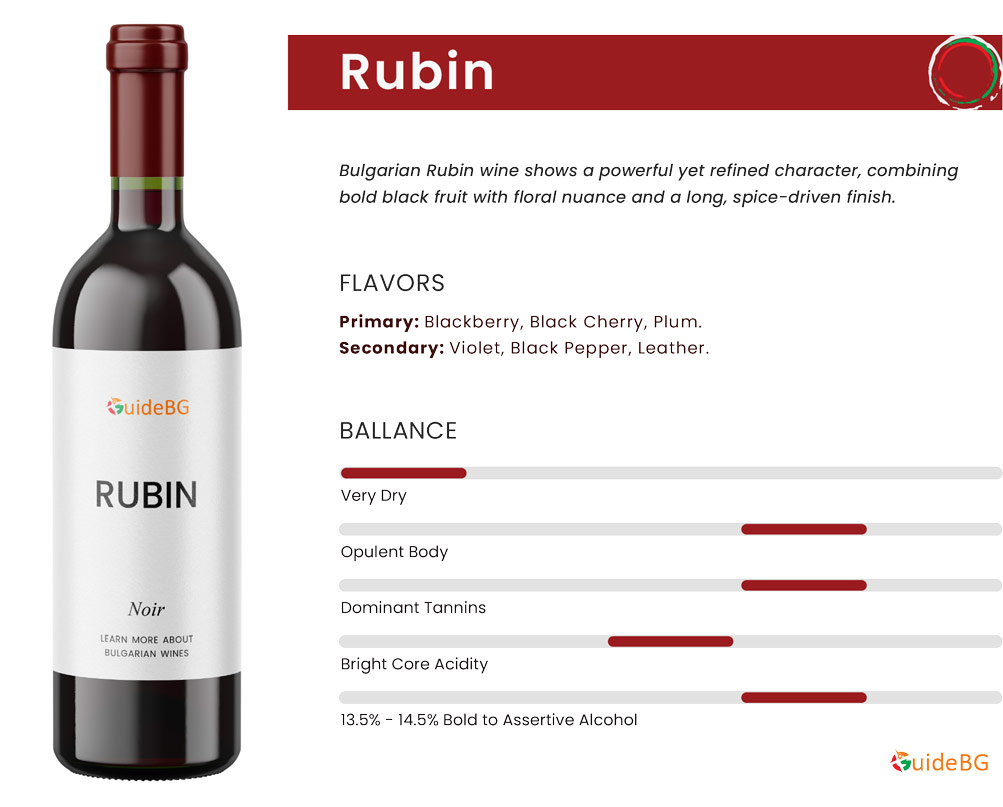
Rubin wines typically show a dense, velvety body, firm yet ripe tannins, and a structure that invites aging. The synergy of dark fruit, floral lift, and savory spice gives the wine depth and character. Its boldness is tempered by natural freshness, making it robust and graceful.
Serving
16-18°C

Oversized
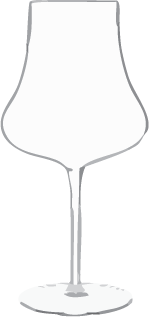
40-60 min

Food Pairing
Rubin pairs beautifully with braised meats, lamb shank, and hearty stews. Its richness and spice complement dishes featuring rosemary, black pepper, or smoked paprika, and it pairs well with aged cheeses and mushroom risotto.
What to Look For?
Top examples of Rubin exhibit deep ruby to garnet color, aromas of ripe dark fruit, spice, floral notes, and a dense yet balanced palate. Wines often have a firm structure, fine-grained tannins, and the potential to age gracefully.
Cellaring Potential
Well-made Rubin wines can age 3-5 (or more) years, developing leathery, earthy complexity and mellowing tannins.
Blending Partners
Rubin is best enjoyed solo. Blends are used to add color, spice, and mid-palate density. Common varieties include Mavrud, Cabernet Sauvignon, and Merlot, though many winemakers bottle it as a varietal wine to highlight its unique character.
Alternative Grapes
If you enjoy Rubin, you may also like Syrah’s spice and depth or Sangiovese’s acidity-driven structure with red fruit and earth.
Often Mistaken For
Rubin is a distinct Bulgarian red grape variety often mistaken for Kaylashki Rubin and Melnishki Rubin due to similar names.