

Pelin is neither a grape variety nor a standard still wine. It is Bulgaria’s traditional aromatised wine-based drink, made from wine flavored with wormwood and other herbs, often rounded by fruit such as grapes, apples, and quinces. Under the current EU rules, Pelin may be made from red, white, or rosé wine, or a combination of them; it must have at least 8.5% alcohol, may have up to 50 g/L sugar, must have at least 3 g/L total acidity, and may also include added carbon dioxide.
It’s documented that Bulgarian tradition stretches back more than 170 years. Academic work traces written references to the mid-19th century, when pelin or pelinash appeared at festive occasions and as an aperitif, and modern research emphasizes that the drink survives in local variants rather than a single rigid national recipe. Pelin is built on wine first, then shaped by wormwood, herbs, fruit, patience, and the producer’s hand.
Pelin in Bulgaria is usually based on white varieties like Dimyat, Rkatsiteli, Chardonnay, and Muscat for fresher styles, or red grapes such as Merlot, Cabernet Sauvignon, and Pamid for a fuller, rounder expression.
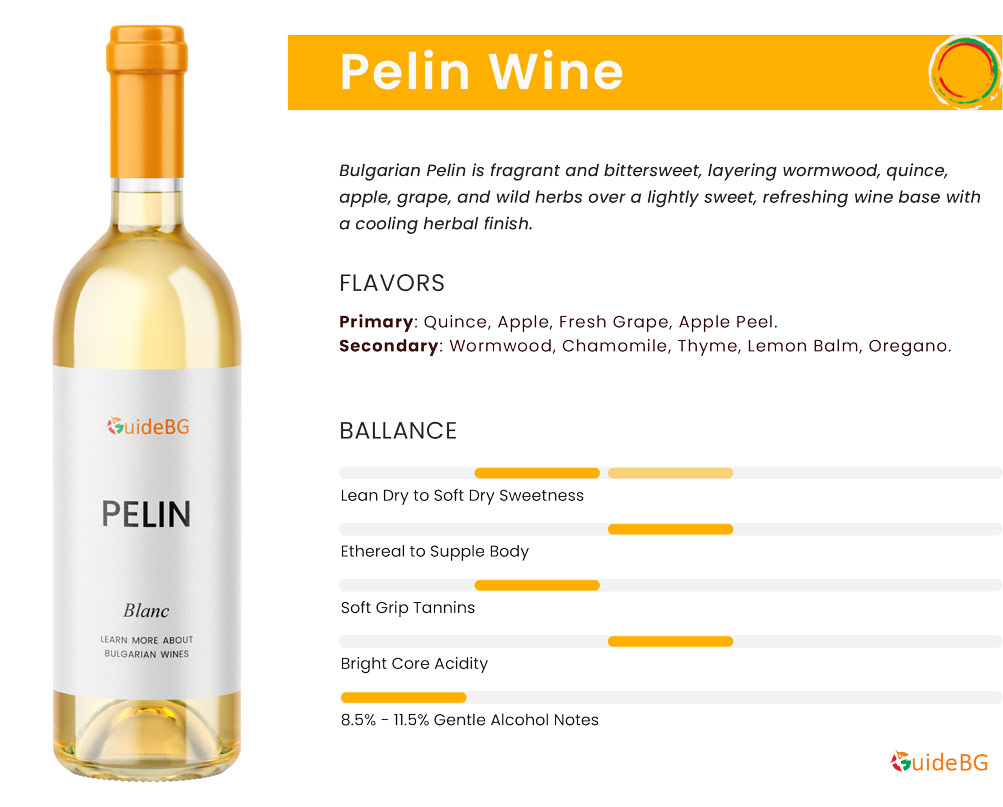
In the glass, good Pelin should feel vivid rather than clumsy. The opening is usually fruity – quince, apple, grape flesh, sometimes a softer orchard-like sweetness, then the palate tightens with wormwood bitterness, meadow-herb perfume, and a slightly tart, appetite-whetting finish. Some modern examples are described as semi-dry, slightly tart, and bittersweet, with more than 30 herbs and fruits layered over an aged base wine.
Serving
9-12°C

Universal

No decanting

Serve Pelin chilled. A smaller white-wine or universal glass suits it better than a large red bowl, because Pelin is about aromatic lift and brisk herbal cut, not tannic breadth. Contemporary Bulgarian examples are commonly recommended around 9–12°C and are often positioned as aperitif or digestif drinks.
Food Pairing
Pelin belongs naturally at a Bulgarian table. It works especially well with vine or cabbage rolls, sausages, black pudding, stuffed peppers, kapama, bean stew, aromatic cheeses, and savory appetizers built on herbs, smoke, and gentle sweetness. Its fruit-and-bitter balance also explains why it has long been associated with aperitif drinking before the main meal.
What to Look For?
Look for a clear aromatic line of wormwood first, backed by quince, apple, fresh grape, and dried garden herbs. Depending on the recipe, the botanical register can lean toward chamomile, thyme, lemon balm, oregano, rosemary, yarrow, coriander, lime blossom, or St. John’s wort. White-based Pelin usually feels brighter and more lifted; red-based versions can feel darker and rounder. The palate should open softly fruity, then turn herbal, cooling, and pleasantly bitter rather than aggressively medicinal.
How It Is Made?
Bulgarian pelin exists in two broad traditional forms: layered pelin and blended pelin. Research summarizing older Bulgarian rules describes layered pelin as one-year-old wine enriched with fresh grapes, apples, quinces, and dry herbs, while the blended version uses a herbal tincture. Older Bulgarian winemaking descriptions also mention several historic methods, including adding dried Artemisia during fermentation or layering grape bunches and herbs in barrels before topping up with finished wine.
Traditional Identity
Wormwood is the defining botanical, but the rest of the recipe is wonderfully open-ended. One recent Bulgarian review found 25 plant taxa reported for pelin nationwide, while a field study in Zmeyovo documented 49 taxa in local use and confirmed that Artemisia absinthium was the only compulsory herb in those village recipes. Apples, grapes, and quinces are among the most typical fruit additions, and local traditions in southern, north-central, and Black Sea Bulgaria all shape the drink differently.
Pelin is not a single uniform drink, but a family of regional and stylistic expressions, most commonly divided into layered Pelin (traditional, fruit- and herb-infused during fermentation) and blended Pelin (wine aromatised with herbal extracts), with notable regional styles such as Zmeyovski Pelin and Osmarski Pelin, each reflecting local botanical traditions.
Cellaring Potential
Pelin is generally more about aromatic freshness than long bottle evolution. Some examples are built on aged base wine, but stylistically it makes more sense to buy it for lively fruit, fragrant herbs, and a clear wormwood finish than to wait many years for tertiary development. That drinking-window advice is an editorial inference from the style’s fruit-and-botanical emphasis and from contemporary examples, rather than a formal legal rule.
Similar Styles
If Pelin interests you, compare it first with vermouth. Both belong to the broader family of aromatised wine products, but vermouth falls within the aromatised wine category and includes added alcohol, while Pelin is part of the aromatised wine-based drink category and is more deeply rooted in the Bulgarian fruit-and-herb tradition.