

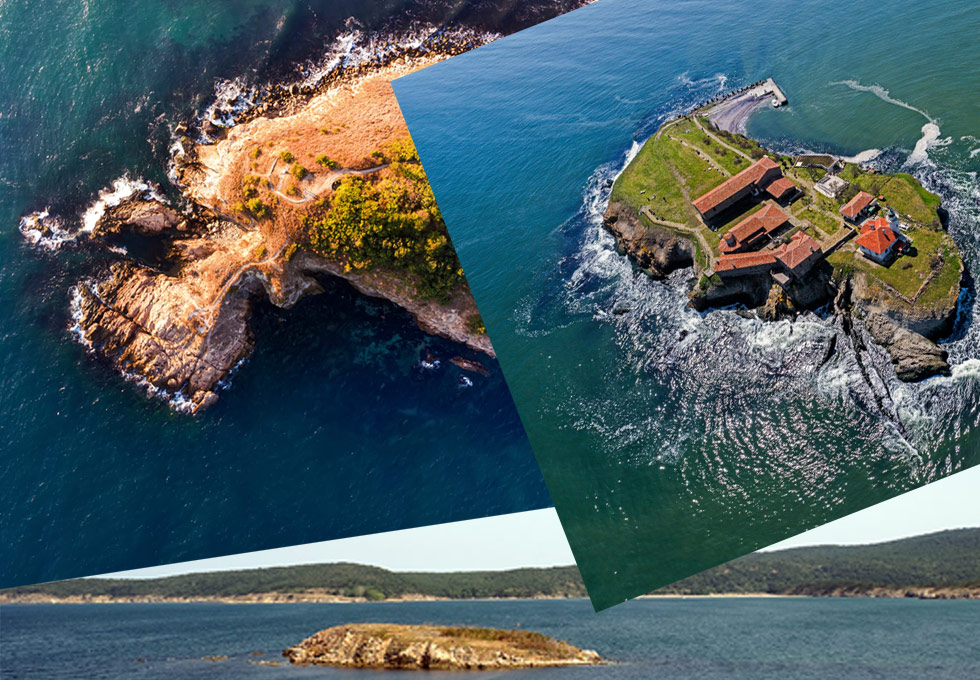
Bulgaria’s islands look tiny, yet they feel surprisingly cinematic today. On the Danube, willow forests and sandbars rewrite shorelines nightly. Travelers usually choose a beach or a river, but you can combine them. This guide smoothly stitches together both worlds into a single itinerary for Bulgaria. You will find monasteries of saints, pagan temples, and modern museums. You will also find wetlands, bird colonies, and quiet memories. Some islands invite you ashore, others demand distance and respect. That tension is the story, and it shapes travel choices. We focus on five sea islands and three Danube islands. Expect vivid details but also the practical stuff you need.
Bulgaria has only a handful of true Black Sea islands. All sit on the southern coast near Burgas and Sozopol. They are rocky points in sheltered bays shaped by navigation. The Danube is different; it continually creates islands from silt. River islands expand, shrink, and sometimes split overnight after floods. Because habitats are fragile, many islands are Natura 2000 sites. Natura 2000 is the European Union network for the protection of threatened habitats. On the Danube, the Belene Islands Complex is also a Ramsar site. The Ramsar Convention lists wetlands of international importance and encourages their protection globally. These labels affect what you can do and when. In practical terms, island travel here is mostly day-based. Only one island offers official accommodation for visitors: St. Anastasia. For everything else, you sleep in nearby towns and ports.
Black Sea Islands
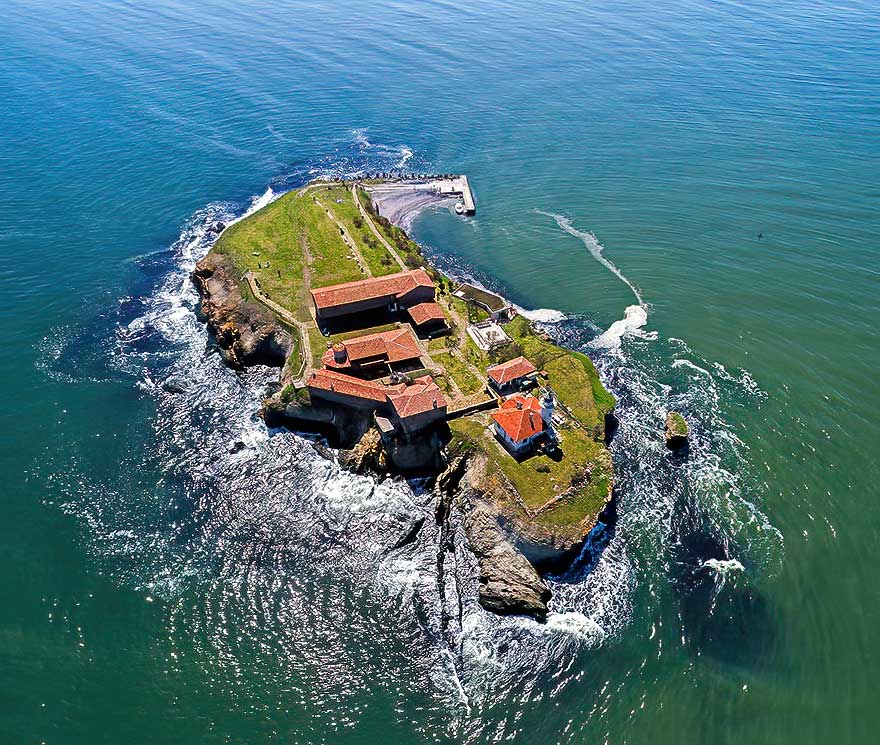
Start with St. Anastasia, a volcanic islet in Burgas Bay (southern Black Sea region). The island is 12 meters high, and some rocks reach 17 meters; its area is roughly 0.009 km2, smaller than many city parks. Yet it holds a monastery complex, a lighthouse, a museum, and a restaurant. The listing notes five rooms, shops, and guides year-round. It is also accessible for travelers with disabilities by sea. History here has a twist: the island was called Bolshevik. That name covered 1959 to 1990, echoing its prison past. Heritage guides trace a monastery presence by the tenth century. Pirate attacks and rebuilding left legends, and a carved iconostasis. A post from Burgas Municipality shows ferry times, but not the current ones. For the latest sailings, check the island’s website or the Burgas Municipality website.
St. Ivan Island
Next, sail to St. Ivan, the largest Bulgarian sea island (southern Black Sea region). Its area is 0.66 km2 and rises to 33 meters. Archaeology makes the island a timeline, from pagan sanctuaries onward. A monastery dedicated to St. John the Forerunner grew here. It became a monastic center in the tenth century. Rebuilding between 1262 and 1310, fully rebuilt churches and walls. In 1453, the Ottoman conquest destroyed the monastery completely again. In 1629, authorities demolished most buildings to deter pirates later. After Rome took Apollonia in 72 BC, a lighthouse rose. A cholera hospital was established here during the Russo-Turkish War. In 2010, archaeologists found a sealed reliquary under an altar. A scientific study dated one bone to the first century AD.
St. Peter Island
Beside St. Ivan sits St. Peter, known as Bird Island. It covers about 0.025 km2 and reaches a height of 9 meters. It appears in sources only after the nineteenth century. Some suggest it split from St. Ivan; evidence remains uncertain. Excavations identified traces of a National Revival chapel and pottery. For travelers, both islands are usually seen by summer boats. Landing rules can change, so confirm with Sozopol operators first.
St. Thomas Island
For wildness, aim for St. Thomas, also called Snake Island. It is tiny 0.012 km2 a rocky dot in Arkutino. The island is known for its prickly pear cactus, which blankets the slopes. Botanist Ivan Buresh planted it in 1933 at the royal’s orders. Water snakes also live here, feeding on fish in the shallows. St. Thomas sits inside the Ropotamo Reserve protected area complex today. Reserve rules prohibit most activities except planned routes and boats. That usually means viewing from a boat rather than wandering freely. If you want to land, ask the authorities about permits first. Nearby towns like Primorsko offer beaches, hotels, and easy logistics. Combine a riverboat on Ropotamo with coastal islands for contrast. Photographers love cactus silhouettes at sunset and birds over water. Bring a long lens; keep a distance from nesting and reptiles. Note that on many occasions, visiting the island may not be safe without a skilled guide.
Danube Islands
Persin Island
Now shift to the Danube, where islands are often wetlands. The flagship is Persin, also known as Belene Island near Belene. Persina Nature Park was created in 2000 to restore habitats. The park covers 21,762 hectares across municipalities. Those include Nikopol, Belene, and Svishtov along the Bulgarian bank. The park is named after Persin, the largest island on the Danube in Bulgaria. Belene Islands Complex is Bulgaria’s Ramsar wetland flagship site today – one big island plus nine islands and marshes. It has flooded forests and freshwater lakes and has flood-mitigation value, and features rare plants and threatened birds, such as pelicans. Persina staff maintain hides and observation points, and host exhibitions. For logistics, start at the visitor center on the Belene riverbank.
Persin is of dark heritage, and it has hosted prisons. A labor camp held political prisoners for decades under communism. Today, Belene promotes a memorial park, and visitors arrive respectfully. Access is controlled, and organized visits are the wisest course. For nature first, book birdwatching tours through the park’s visitors center. Danube Day in Belene can add fishing and cooking contests; periodically, there are events around Belene’s info center and sturgeon exhibits. In early September, Persina Fest mixes music with riverside summer. Stay overnight in Belene, then take dawn boats for herons. Pack insect repellent. Danube evenings can be aggressively buggy sometimes.
Vardim Island
Downstream Vardim Island sits near Svishtov opposite Vardim village today. Official Natura 2000 forms describe floodplain forests and sand shallows. They highlight oak and elm associations unique to the region. Birders come for cormorants, night herons, and spoonbills breeding here. White-tailed eagles are breeding there again now. Vardim is mostly wild; there are no hotels or museums. Visit by boat and always avoid nesting zones in season. Sandbars make summer beach days possible, but currents change fast. Plan spring trips for green floodplain forests and calmer heat. For bird photography, sunrise light easily beats midday glare. Carry water shade is often limited outside the riparian woods. If the river is high, expect flooded trails and detours. Respect property signs; the Danube islands sometimes mix nature and farms.
Suggested itineraries for travelers
A day-trip itinerary works best when you pick one coastal base or one Danube base and treat the island(s) as a highlight, not the whole day.
St. Anastasia Island – A Black Sea Day Trip
A Black Sea day trip based in Burgas is the simplest “island plus culture” combo: morning in Burgas, mid-day boat to St. Anastasia (museum + lunch), and late afternoon back in town for seaside walking. Some information on the ways to visit the island – here, but treat the latest ferry schedule as unspecified and verify through official channels.
Sozopol and Around, 2-3 Days
A 2–3 day coastal itinerary (culture-forward) naturally centers on Sozopol: one day for Sozopol Old Town atmosphere and a second day for the island’s seascape and archaeology narrative. The Sozopol Museum Center’s interpretation of Sts. Kirik and Julita provide unusually concrete ancient-city material (temples, sanctuary debate, basilica context), while St. Ivan’s monastery narrative and the 2010 reliquary discovery supply modern “wow” moments that still have an academic paper trail. Add a third day for the Ropotamo river and nature reserve, and, if you like, a boat trip and a St. Thomas viewing cruise; keep reserve rules front of mind. Alternatively, plan a longer trip – the Southeastern Road Trip.
Danube River, 2-3 Days
A 2–3-day Danube itinerary (nature + history, respectively) works best from Belene: start at the Persina Nature Park visitor center for orientation, then choose either a birdwatching-focused outing or a memorial-focused outing at Persina (or split them across two mornings).
Practical planning and responsible travel
Permits and restrictions
Many island landscapes intersect with protected-area regimes (Natura 2000 and/or strict reserves). For reserves like Ropotamo, the rule of thumb is: if it isn’t explicitly allowed by the management framework, assume it is not allowed. The Green Corridors summary states broad prohibitions with narrow permitted activities (organized boat trips, designated routes, limited exceptions).
Accommodations and guided tours
Only St. Anastasia is officially described as having on-island accommodation (five rooms) plus food and visitor services, both seasonal and occasion dependent. Plan all other overnights in gateway towns (Burgas, Sozopol, Primorsko, Belene, Svishtov, Kozloduy). For the Danube wetlands, guided birdwatching is the “low-impact, high-reward” format implicitly recommended by protected-site framing and the presence of official hides/observation points described by Persina’s Directorate.
Safety and accessibility
For sea islands, the dominant risks are wind, swell, and slippery rock; for river islands, currents, mosquitoes, and sudden water-level changes matter most. For St. Thomas, snakes are a well-known feature of the island’s identity; treat them as a wildlife-viewing note, not a thrill-seeking prompt.
Photography and wildlife highlights
For Black Sea islands, the most photogenic approach is usually from the water: cliff silhouettes, monastery ruins, and seabirds without disturbing nesting zones. For Danube islands, dawn and late golden hour deliver the strongest light and the most bird activity; the Natura 2000 documentation for Vardim explicitly frames the island as a major breeding site for colonial waterbirds and notes the return of white-tailed eagle breeding.