

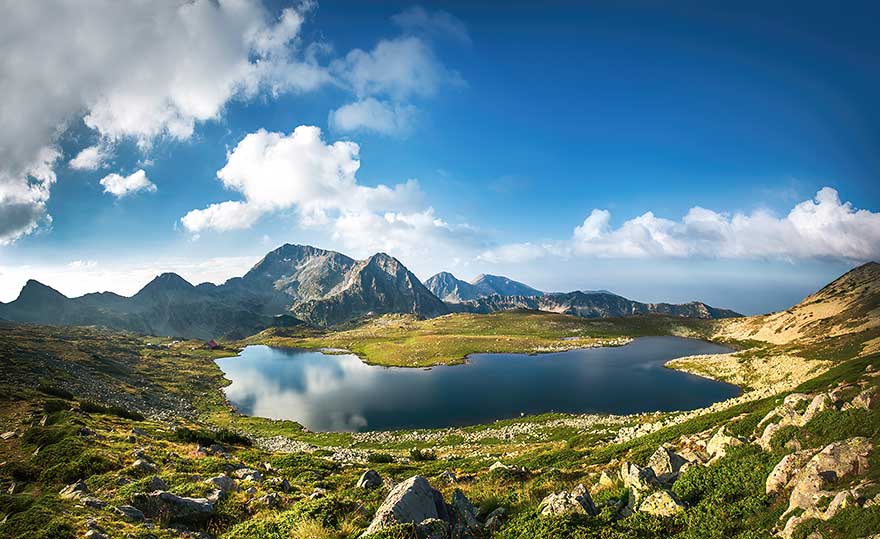
Pirin National Park is in the Pirin Mountains of southwest Bulgaria, not in the Rhodope Mountains. The Pirin massif lies between the Struma and Mesta river valleys, and the park protects the highest and most visited parts of the mountain.
Area: The national park covers 40,356 hectares. The UNESCO World Heritage property is listed as 38,350.04 hectares, with a 1,078.28-hectare buffer zone; UNESCO also describes the post-2010 World Heritage property as “around 40,000 ha.”
UNESCO status: Pirin National Park was inscribed on the UNESCO World Heritage List in 1983, and its World Heritage boundary was modified in 2010. The UNESCO property overlaps the national park, except for two developed ski areas above Bansko and Dobrinishte, which are treated as buffer zones.
Highest point: Vihren Peak, at 2,914 m, is the highest summit in Pirin and one of the highest peaks in the Balkans.
Visitor centers: The park has official visitor information centers in Bansko and Sandanski.
Official routes: The Park Directorate lists 27 marked pedestrian routes and provides official route-visualization and map resources for visitors.
Pirin National Park protects the dramatic high-mountain landscapes of the Pirin Mountains in southwest Bulgaria. Its territory includes alpine ridges, glacial lakes, cirques, old-growth forests, rare endemic plants, and some of the country’s most important high-altitude habitats. The park is best known for Vihren Peak, the Koncheto ridge, the Banderitsa and Demyanitsa valleys, Popovo Lake, Tevno Ezero, Sinanitsa, Bezbog, and the Bayuvi Dupki–Dzhindzhiritsa area.
The park was first established in 1962 as People’s Park “Vihren” and was later expanded and recategorized as Pirin National Park. Today it is managed by the Pirin National Park Directorate under Bulgaria’s environmental authorities.
Pirin’s UNESCO status reflects its outstanding mountain scenery, glacial landforms, and biodiversity. The protected area contains more than 50 peaks over 2,500 m and around 170 glacial lakes. Its biodiversity includes about 1,300 vascular plant species, including Balkan, Bulgarian, and local endemics, as well as more than 2,000 invertebrate species and 229 recorded vertebrate species, including 159 bird species and 45 mammal species.
What is a UNESCO World Heritage Site?
A UNESCO World Heritage Site is a place recognized by the World Heritage Committee as having “Outstanding Universal Value.” Pirin National Park is listed under natural criteria for its mountain scenery, glacial geomorphology, continuing ecological processes, and biodiversity. Its World Heritage inscription does not mean the whole mountain is open for unrestricted use: visitors must follow the park’s marked routes, protection regimes, and safety rules.
Main access points and trailheads
Bansko / Banderitsa / Vihren Hut
Bansko is the main northern gateway to the park. The asphalt road from Bansko leads to Banderitsa Hut and Vihren Hut, which are among the most-used starting points for Vihren Peak, the Banderitsa valley, Baikushevata Mura, Demyanitsa routes, and parts of the long-distance E-4 route.
Dobrinishte / Gotse Delchev Hut / Bezbog Hut
Dobrinishte is the main eastern gateway. The route toward Gotse Delchev Hut and the Bezbog chairlift gives access to Bezbog Hut, Bezbog Lake, Popovo Lake, Polezhan, the Demyanitsa area, and routes continuing toward Pirin Hut and Melnik.
Predel / Razlog / Yavorov Hut / Bayuvi Dupki
The Predel and Razlog side provides access to Yavorov Hut, the Bayuvi Dupki area, Suhodolski Pass, and the northern section of the E-4 route. The park’s Bayuvi Dupki section also lists the Betolovoto control-information point as an access point.
Sandanski / Yane Sandanski Hut / Begovitsa / Spano Pole / Tevno Ezero
The Sandanski side is the main approach to the Kamenitsa area, including routes toward Yane Sandanski Hut, Begovitsa Hut, Spano Pole, and Tevno Ezero. This part of the park is also connected to routes toward Vihren, Demyanitsa, Pirin Hut, and Sinanitsa.
Kresna / Sinanitsa
The Kresna and Sinanitsa side provides access to the western part of the park, including the Sinanitsa area, the Vlahinski and Sinanishki cirques, and routes leading to Spano Pole, Begovitsa, and the central Pirin ridge.
Popovi Livadi / Pirin Hut / Melnik / Rozhen
The southern approaches connect Popovi Livadi, Pirin Hut, Melnik, and Rozhen with routes toward Tevno Ezero, Begovitsa, Bezbog, and the Three Rivers area.
Official routes and maps
The Pirin National Park Directorate lists 27 marked pedestrian routes. These include the E-4 route through the park, Bansko–Vihren Hut–Yane Sandanski Hut, Bansko–Demyanitsa Hut–Begovitsa Hut, Dobrinishte–Bezbog Hut–Pirin Hut–Melnik, Vihren Hut–Sinanitsa Hut, Demyanitsa Hut–Bezbog Hut, Bezbog Hut–Polezhan–Gazey–Demyanitsa, and other marked routes across the main Pirin valleys, huts, and passes.
For planning, visitors should use the Directorate’s official walking-route page, its route-visualization map, and the official map resources for marked tourist routes. These are the safest links to add to the GuideBG page because they are maintained by the park authority rather than by a third-party blog or outdated tourism listing.
The Directorate also lists marked cycling routes near Bansko and Dobrinishte. Cycling visitors should use only the authorized routes and should check the current park rules before entering protected zones.
Visitor centres
Bansko Visitor Information Center
The Bansko Visitor Information Center features an exhibition, visitor hall, and projection hall with interpretive modules on Pirin’s geology, flora, fauna, and protected habitats. The official visitor center page lists the address as 104 Pirin Street, Bansko, with weekday working hours from 09:00–12:30 and 13:00–17:30. Group visits require a prior request.
Sandanski Visitor Information Center
The Sandanski Visitor Information Center provides information for visitors to the southern part of the park and also houses the administrative office for the Kamenitsa park section. The official page states that visits are arranged by prior request, with working hours from 09:00 to 17:00.
Permits, restrictions, and responsible visiting
Ordinary hiking on the officially marked routes is not presented by the Park Directorate as requiring a general entry permit, but visitors must follow marked routes, posted regimes, and the rules of the protected area. Motor vehicles, motorcycles, ATVs, and similar vehicles are restricted outside designated and permitted roads.
Camping is allowed only in designated areas near huts. Open fires, entering lakes and rivers, picking flowers, disturbing wildlife, hunting, and walking dogs without a leash are prohibited or restricted under the visitor rules for Bulgaria’s national parks. Fishing is allowed only in designated, marked areas and must comply with the applicable fishing rules.
For gathering mushrooms, hay, or other natural resources, visitors should check directly with the Park Directorate before collecting anything. The Directorate publishes administrative services for regulated uses such as mushroom gathering and hay use, and these are subject to park-management rules and permits.
Safety
Pirin is a high mountain. Weather can change quickly, and snow, fog, thunderstorms, ice, and avalanche conditions can make routes dangerous even outside the main winter season. Before setting out, choose a route that matches your experience and fitness, check the weather forecast, study the route difficulty and escape options, and avoid high routes in fog, storms, heavy snow, or avalanche conditions.
Visitors should wear proper mountain footwear and carry water, food, a charged phone, a power bank, a first-aid kit, a headlamp, a map or compass, a whistle, and season-appropriate clothing. Hikers should tell someone their planned route and return time, avoid going alone where possible, stay on marked routes, and carry all waste back out of the park.
In an emergency, call 112. The park safety page also lists 1470 for the Mountain Rescue Service and the Pirin National Park Directorate contact numbers for incidents in the park.
The park authority’s own pages:
- Pirin National Park route list: 27 marked pedestrian routes
- Mountain route-visualization page
- Maps and marked tourist-route map resources
- Huts and shelters information
- Visitor-center pages for Bansko and Sandanski
- Safety rules for visitors