

Bulgaria is an excellent camping destination, with Black Sea beaches, forested mountains, mineral springs and quiet countryside. However, choosing a beautiful location is only part of the planning. Whether you can legally pitch a tent or stay overnight in a campervan depends on the type of land, local restrictions, protected-area rules and fire-safety orders.
The simplest option is a categorized campsite or an officially approved seasonal camping area.
Is wild camping legal in Bulgaria?
There is no single nationwide rule that makes all wild camping either legal or illegal. Instead, several laws and local rules may apply to the same location.
Before camping outside an established campsite, check:
- Who owns the land and whether you have permission
- Whether the location is in a protected area
- Whether it falls within the regulated Black Sea coastal zones
- Whether vehicles are allowed to reach the location
- Whether the municipality has introduced additional restrictions
- Whether a temporary fire ban is in force
Landowner permission alone is not sufficient if environmental, coastal, forest, zoning or fire-safety rules prohibit camping there.
| Location | General position |
|---|---|
| Categorized campsite | Normally permitted, subject to the campsite’s rules |
| Municipality-approved coastal camping area | Permitted during its authorized season and under its published rules |
| National or nature park | Bivouacking is allowed only in designated places |
| Reserve or maintained reserve | Camping is not permitted |
| Black Sea beach | Not a legal overnight camping option; never drive or park on the beach |
| Sand dune | Do not pitch a tent, drive or park on dunes |
| Private land | Owner permission is required, but all other laws still apply |
| Natura 2000 site | Check the site’s individual protection order or management plan |
Bulgaria’s official Protected Areas Register can help identify national parks, nature parks, reserves and other protected territories. Natura 2000 status does not automatically create the same rules everywhere, so the restrictions for the particular site must be checked.
New rules for camping on the Black Sea coast
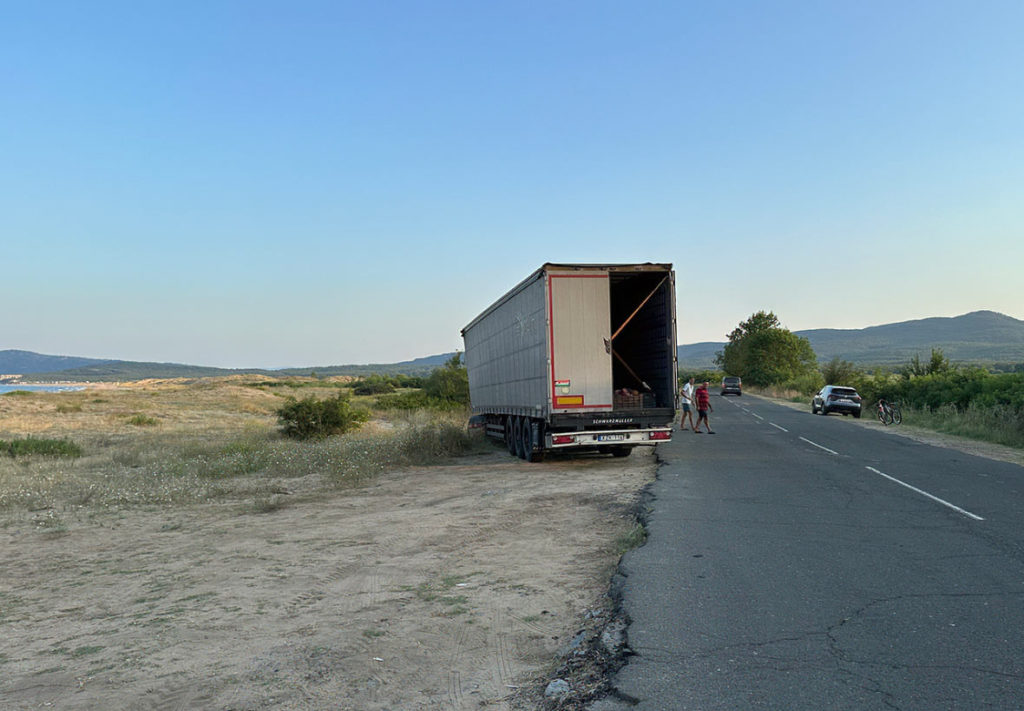
An important new ordinance entered into force on 1 October 2025. It regulates temporary places for tents, campervans and caravans within coastal Zones A and B.
Municipalities can now authorize seasonal camping areas that are:
- Outside beaches and sand dunes
- Outside categorized campsites
- Approved by the mayor or another authorized municipal official
- Open between 1 May and 30 September
- Operated according to published access, waste, sanitation, safety and fire rules
These areas are not categorized campsites under the Tourism Act. They may offer fewer services, but they must have an approved layout, waste arrangements, portable toilets and operating rules. A usage fee may be charged, so “temporary camping area” does not necessarily mean free camping.
An authorization may be issued for up to three years. The effective order should be published on the relevant municipality’s website. For example, Sozopol Municipality maintains a public registers page that includes approved temporary camping locations.
The detailed requirements are set out in the 2025 ordinance published in the State Gazette and the Black Sea Coast Spatial Development Act.
Important: Article 24v’s specific penalty for pitching a tent or positioning a camper or caravan on another person’s unregulated coastal property outside an approved area is scheduled to apply from 1 October 2026. This does not create a general grace period. Beach, dune, protected area, forest, fire, and municipal restrictions can already be enforced.
Campsites in Bulgaria worth checking
The following are examples, not a ranking. Opening hours, prices, and services may change, so confirm directly before traveling.
Zlatna Ribka, near Sozopol
Zlatna Ribka Royal Campsite is one of the established options on Bulgaria’s southern Black Sea coast. It offers pitches for tents, caravans and campervans close to Sozopol.
Camping Veliko Tarnovo
Camping Veliko Tarnovo is a convenient base for visiting Veliko Tarnovo, Arbanasi and central Bulgaria. Its 2026 season, published, runs from May to September.
7 Lakes Camping, near Sapareva Banya
7 Lakes Camping provides access to Sapareva Banya, the Rila Mountains and the Seven Rila Lakes area. Remember that camping inside Rila National Park itself is restricted to designated locations.
Thermal Camping Velingrad
Thermal Camping Velingrad combines campervan and caravan facilities with access to the mineral-water and mountain attractions around Velingrad.
Sakar Hills Camping
Sakar Hills Camping is a useful countryside and transit stop in southern Bulgaria, particularly for travelers exploring the Sakar region or traveling between Bulgaria, Greece and Türkiye.
Accommodation providers should be categorized or registered. You can check them through Bulgaria’s National Tourism Register.
Campervans and motorhomes in Bulgaria
Parking a motorhome does not always mean that camping activity is permitted. Local signs and municipal rules may restrict overnight stays or activities such as extending an awning, putting out furniture or using cooking equipment.
When traveling by campervan:
- Use public roads and designated access routes
- Never drive onto beaches or dunes
- Do not drive off-road through forests
- Check signs before entering forest roads
- Empty chemical toilets and grey water only at appropriate facilities
- Do not block agricultural, emergency or forestry access
- Avoid creating noise near homes and villages
- Confirm whether your vehicle requires an e-vignette or distance-based toll
Under Bulgaria’s Forest Act, motor vehicles are generally restricted to forest roads and specifically designated routes. A map pin or visible track does not necessarily give permission to drive into forest land.
See our guide to the e-vignette and BG-Toll system before traveling.
Campfires and outdoor cooking
Light a fire only in a designated place, where it is expressly allowed and when no temporary fire ban is in force.
During dry and high-risk periods, national parks, municipalities and fire authorities may introduce stricter temporary restrictions. A portable stove or barbecue should not be treated as an automatic exception when open flames are prohibited.
Keep water or a suitable extinguisher nearby, never leave a flame unattended, and extinguish it completely before leaving. If the ground is still warm, the fire is not fully out.
Weather, floods and wildlife
Avoid dry riverbeds, narrow ravines, unstable slopes, and low ground near rivers. A storm many kilometers away can cause a sudden rise in water levels.
Check the forecast before choosing a location and leave immediately if authorities issue a warning. Read our guide on what to do in case of a flood.
Store food and rubbish securely, particularly in mountain and forest areas. Do not leave food inside or immediately beside a tent. Our wild animal safety guide explains how to reduce encounters with bears, wild boar, livestock guardian dogs and other animals.
Checklist before setting up camp
Before pitching a tent or extending a campervan awning:
- Confirm the landowner’s permission.
- Check whether the location is protected.
- Search the municipality’s website for local rules or an approved coastal register.
- Read all signs at the entrance or access road.
- Confirm that vehicles are permitted on the approach.
- Check the weather and current fire-risk notices.
- Identify a safe evacuation route.
- Use proper waste and wastewater facilities.
- Keep noise low and respect nearby residents.
- Leave the location clean and undamaged.
Leave no trace
Take all rubbish with you, including food scraps, tissues and biodegradable packaging. Do not cut vegetation, dig drainage channels, damage trees or disturb wildlife. Use existing pitches and paths where possible.
Responsible camping protects Bulgaria’s landscapes and helps keep them accessible to future visitors.
Frequently asked questions
Can I camp anywhere in Bulgaria with the owner’s permission?
No. Permission is important, but protected-area, coastal, forest, municipal and fire rules may still prohibit camping.
Can I sleep in a campervan parked beside the road?
It depends on the location, road signs and municipal rules. Parking may be allowed while camping behavior is restricted. Use a designated campsite or motorhome area when in doubt.
Can I camp directly on a Black Sea beach?
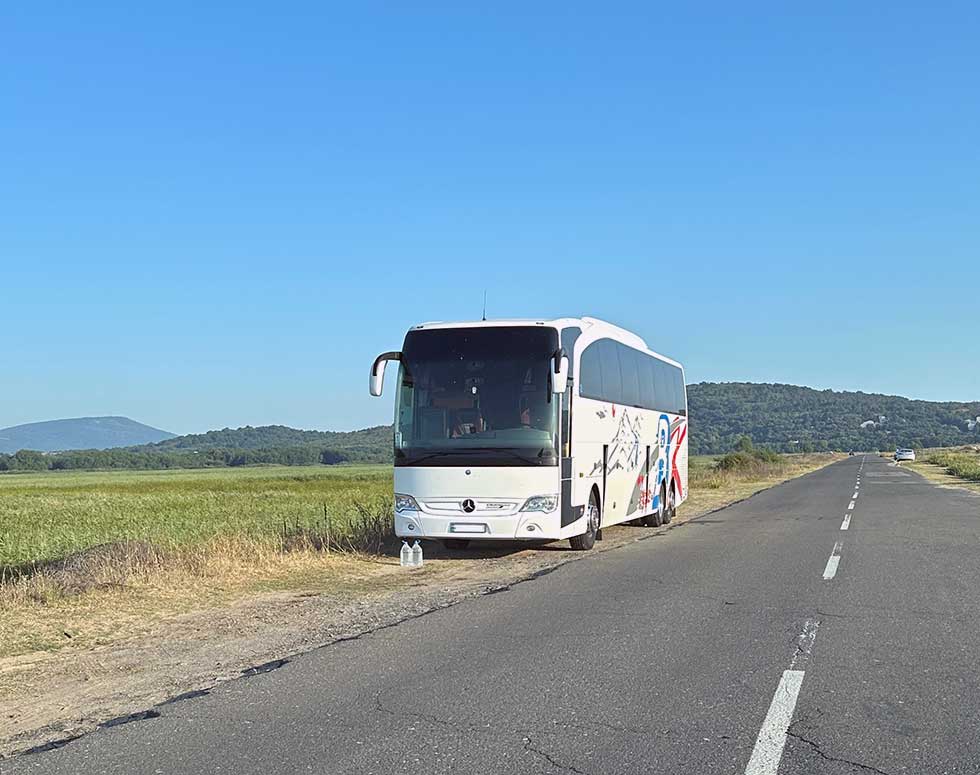
A beach is not an approved overnight camping location. Never drive or park a vehicle on a beach or dune, and do not pitch a tent on dunes.
Are Bulgaria’s temporary coastal camping areas free?
Not necessarily. Their operating rules must state the applicable price, and the municipality’s authorization should be publicly available.
Fines and penalties for illegal camping
Bulgaria does not have one universal “wild camping fine.” The penalty depends on the location and the particular offense. More than one legal regime may apply, and local municipal rules can introduce additional penalties.
The amounts below are the principal national fines for individuals. Where legislation still displays amounts in Bulgarian lev, the euro equivalent is calculated at the official fixed rate of €1 = BGN 1.95583.
| Offence | Fine for an individual |
|---|---|
| Pitching a tent, shelter or similar structure on protected sand dunes | €255.65–€511.29 |
| Driving, stopping or parking a vehicle on a Black Sea beach or protected dunes | €511.29–€1,533.88 |
| Violating the applicable regime of a protected area | €255.65–€2,556.46 |
| Using forest roads contrary to the rules or dumping waste that pollutes forest land | €102.26–€1,022.58 |
| Violating forest or fire-safety rules where no higher penalty is specified | €25.56–€255.65 |
| Discarding waste at an unauthorized location | €153.39–€511.29 |
| Minor littering dealt with by an on-the-spot ticket | €5.11–€25.56 |
The coastal fines for dunes and vehicles are already enforceable under the Black Sea Coast Spatial Development Act. The protected-area, forest and waste penalties arise under the Protected Areas Act, Forest Act and Waste Management Act, respectively.
Coastal penalty beginning on 1 October 2026
From 1 October 2026, a separate fine of €255.65–€511.29 will apply to a person who pitches a tent or positions a camper or caravan on another person’s unregulated property in coastal Zone A or Zone B, outside an authorized temporary camping area. A repeat offense carries a fine of €766.94–€1,533.88.
This future penalty should not be confused with the dune and beach-vehicle fines, which are already in force.
The listed amounts are not an exhaustive list of tariffs. Municipal ordinances and temporary orders may impose other penalties. Anyone who damages vegetation, dunes, roads or other property may also be required to pay restoration costs. Starting a wildfire or causing serious environmental damage can result in substantially greater civil or criminal liability.
Disclaimer: Regulations and temporary orders are subject to change. Check with the municipality, protected-area authority, and campsite operator, and review current fire restrictions before traveling.